Nearly 37 Million People in Myanmar Are Poor or at Risk of Multidimensional Poverty, UNDP Finds
NAYPYIDAW — More than 37 million people in Myanmar are either living in multidimensional poverty or are vulnerable to slipping into it, according to the United Nations Development Programme (UNDP).
The figures appear in the UNDP report ‘Layers of Deprivation: Multidimensional Poverty in Myanmar,’ which was published on October 8.
The report estimates that about 17.9 million people are currently experiencing multidimensional poverty, while another 19.5 million are at risk of falling into it.
UNDP stresses that poverty is about more than a lack of money. It often overlaps with shortfalls in health, living standards and education. For that reason, the agency argues that reducing poverty requires more than steadier incomes. Households also need stronger resources, better opportunities and greater ability to recover from setbacks.
Because poverty looks different from one place to another, UNDP says both how widespread deprivation is and how deep it runs must be considered. Kayah and Rakhine stand out, where insecurity and movement restrictions make hardship especially severe. In those states, a large share of residents are affected, and the deprivation is more acute. In terms of sheer numbers, however, most deprived households are concentrated in the more populous regions and states of Ayeyarwady, Sagaing, Mandalay and Shan.
Economic shocks are widespread: more than half of households nationwide have been affected by one. About one in five households has been hit by a shock linked to natural hazards. Conflict-related shocks are not felt across the whole country, but areas touched by conflict have the highest levels of multidimensional poverty.
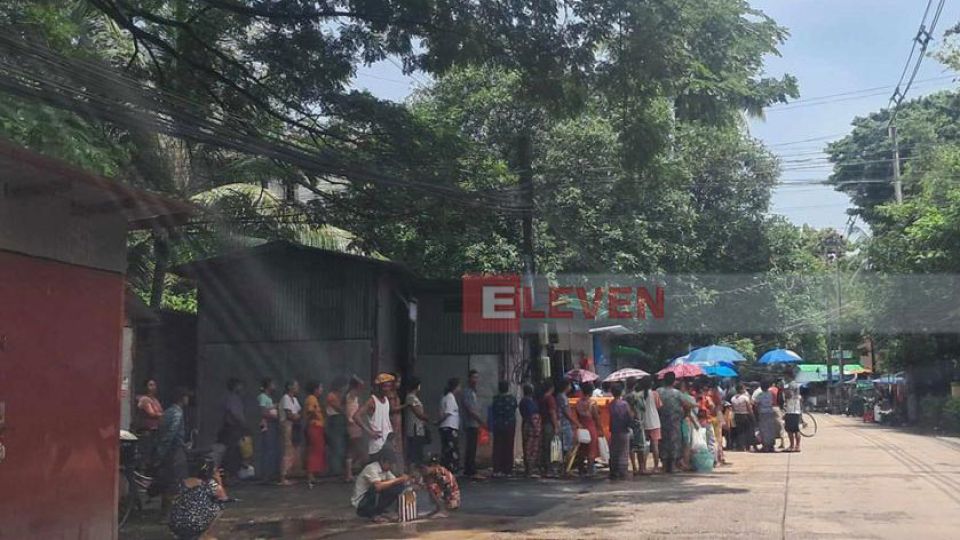
The report also finds that poverty is most common among the lowest-income households, people who depend on daily-wage or temporary work, and families headed by someone with limited schooling. Displaced households and poorer urban residents face added risk because of insecure housing, informal jobs and limited access to basic services.
UNDP concludes that anti-poverty measures must account for the distinct vulnerabilities of each group so that support reaches the people who need it most.