Nepal flood survivors abandon temporary camps as rehabilitation plans stall
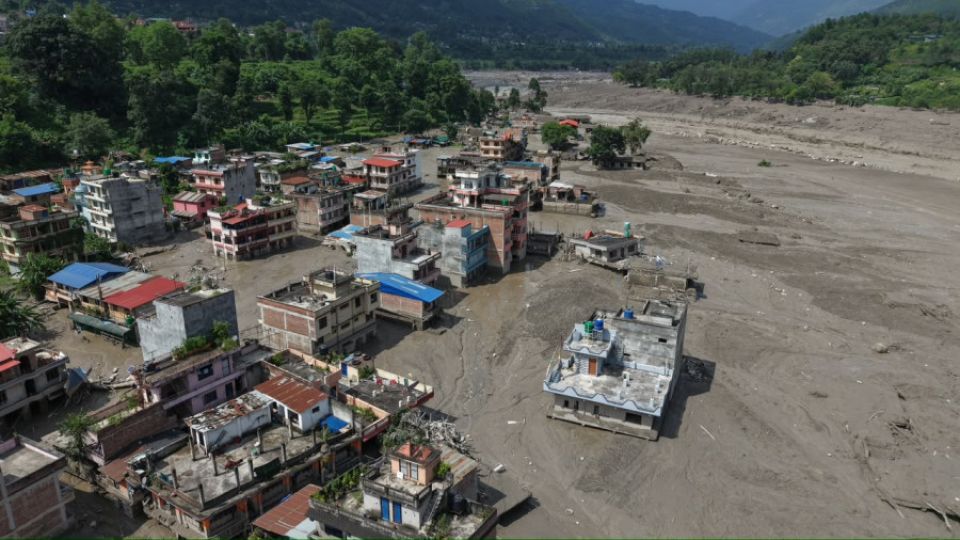
KATHMANDU — Blemde Ghale, 28, from Khalte in Rasuwa district, lost four relatives when the Bhotekoshi river flooded: his mother, his eight-year-old son Roman, and two brothers. Ghale and his pregnant wife survived, but on September 25, a month after escaping, they lost their unborn child.
After fleeing Khalte, the couple stayed at a holding centre in Laharepauwa before relocating to Pipaltar in Nuwakot. On September 22, rain leaked through the tent above them, ruining their clothes and the rice and lentils they had received as relief aid.
"We could not sleep the whole night because of the cold and stress," Ghale said. The following day he chose to rent a room in Bidur, even though he had no idea how he would pay for it.
Ghale is among hundreds of survivors who lost nearly everything in the flood, spent a few weeks in temporary camps, and then left because conditions there were badly inadequate. Most are now renting rooms across Bidur Municipality, and some have moved to Kathmandu. With authorities slow to decide on rehabilitation, survivors are increasingly abandoning the camps set up after the floods.
The floods destroyed more than 7,500 homes across Rasuwa, Nuwakot and Dhading districts. About 4,500 people sought shelter in makeshift camps immediately after the disaster, but only around 1,000 remain, according to the National Disaster Risk Reduction and Management Authority.
"We came to Kathmandu to save our lives," said Nabin Raila of Sole in Bidur Municipality. "Staying in the camp became harder by the day."
Even though they have managed to rent a room in the capital, Raila said they worry about how to cover the rent and how they will eat.
The government has announced Rs15,000 per family per month for six months, but flood victims have yet to receive any of it. They fear sharing the fate of squatters evicted from riverbanks in the capital, most of whom left holding centres citing poor management and no certainty of permanent resettlement.
"The government has not even provided us with relief money to carry out the funeral rites of our loved ones," said Raila, who lost his mother, brother and sister-in-law in the flood. His house and fields were washed away.
Buti Tamang, staying at another camp in Pipaltar, said only those with nothing left and nowhere else to go remain behind. She lost 43 relatives, including her husband Krishna Bahadur Tamang and her parents. Her hotel in Naubise was destroyed, along with her grocery shops in Mailung and Shubhaghat.
Displaced twice
Ghale and Tamang are among many survivors who were already displaced from Gogane in Rasuwa by the 2015 earthquake. After engineers and geologists sent by the then National Reconstruction Authority found their original settlement unsafe, the community was moved to Khalte Bagar.
They first rented private land in Naubise and built temporary shelters, then relocated to Khalte Bagar when rent became unaffordable and no government support arrived. Many of those who settled there were swept away by the flood on August 26. Some survivors are now renting land in Pipaltar and living under tarpaulins.
The tarps were such poor quality that not a single drop of water was kept out, said Uddhab Rijal, head of the Nepal Red Cross Society's Nuwakot district chapter. "After all their belongings were soaked, we hurriedly mobilised volunteers and covered the shelters with plastic sheets," he said.
Rijal said the rain soaked both belongings and people, leaving some sick. He himself developed a cold and fever after getting drenched while working at the camps.
Bishwas Nepali, a writer and activist helping flood-displaced people in Rasuwa, said many have moved to Kathmandu and elsewhere because the camps are uninhabitable and they want their surviving children to keep studying.
According to Nepali, there is no shortage of organisations willing to help. The problem is that the state has not said what kind of houses it will build, where they will go, or whether aid agencies will be asked to construct them.
"Keeping victims in uncertainty for so long without making a decision will prolong their suffering," Nepali said. "The state must understand the plight of displaced people. Some survivors fled with nothing but the clothes they were wearing. They lost everything, including their mobile phones, in the flood."
Flood victims and activists working in the affected areas say the makeshift shelters are no longer fit for habitation, and their biggest concern is the approaching winter. Some displaced families now consist only of children, while others have only elderly members. Those who could earn a living have been unable to leave the camps to work because vulnerable relatives would have no care.
Donors willing to assist say they cannot provide help until the central government decides, raising fears that the displaced will be forced to endure difficult conditions for a prolonged period.
Relief money undelivered
The National Disaster Risk Reduction and Management Authority has said displaced families of four will receive Rs15,000 a month in rent for six months, while those choosing temporary settlement will get Rs50,000 as a one-time payment.
However, none of the families of the deceased or the displaced have received any money from the government.
"We have registered 580 persons from our municipality as missing and 1,536 families under the displaced list," said Salikram Ghimire, chief of the information technology section at Bidur Municipality. "But we have not provided a relief amount to anyone as of now."
Municipal officials say the number of displaced families will rise as those who went to Kathmandu and elsewhere return to the district to register their names.
"We have not declared anyone dead, nor have provided relief for funeral rites," said Ghimire.
Rabindra Nepal, chair of Bidur-7, said 175 families in the ward have been designated as displaced, but none have received any relief money so far.
Officials at the authority said that unless a new decision is taken, flood-displaced people will receive the relief amount set out in existing guidelines.
"For the victims to get the relief amount, respective local units have to designate them as displaced and recommend a relief amount," said Shanti Mahat, the authority's spokesperson, adding that local bodies are still verifying the number of victims and affected families.
Meanwhile, Buti Tamang, the victim staying at Pipaltar camp, said the delay and uncertainty are gnawing at her. "We have nowhere to go," she said. "Sometimes I wonder why I survived the flood."