
No lights, no cameras: how AI is powering China's booming micro-drama industry
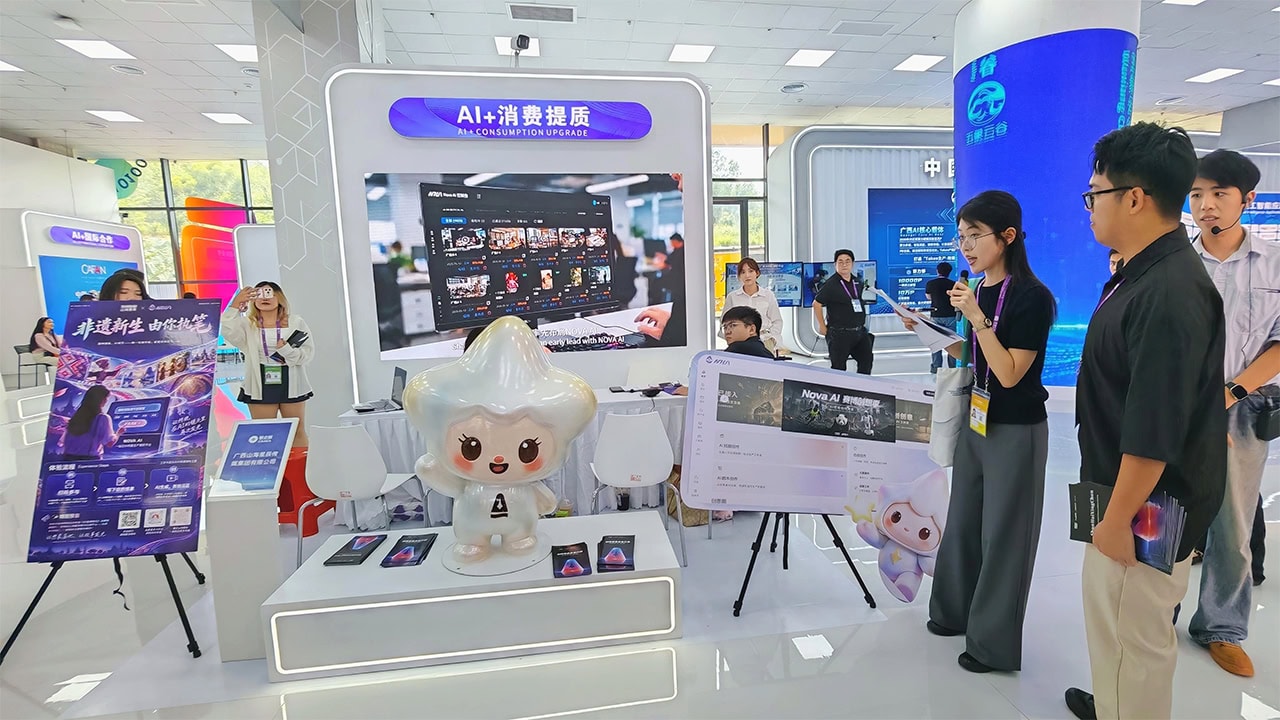
Visitors at a recent trade expo got a rare glimpse behind the curtain of China's fast-growing "micro-drama" industry, where software turns simple written prompts into characters, settings and moving footage using artificial intelligence.
At the 23rd China-ASEAN Expo in Nanning, a demonstration by Nova AI showed how users can write scripts, design characters and convert them into short video sequences.
A staff member walked a reporter through the process on September 18, starting with text entered into the platform.
"You start by entering the text. The platform then generates the image and video content," she said.
The software first produced a fantasy character set against a dark backdrop. After selecting various functions and adding more instructions, the staff member animated the image. Moments later, the platform delivered a short clip of several cloaked figures moving across a mountainous landscape.
The demo illustrated how creators can go from a rough idea or written description to finished images and animated footage through a single interface.
Short episodes, fast production
Systems like these are helping Chinese producers cut production times and lower some of the costs involved in making micro-dramas, ads and other online videos.
Chinese micro-dramas are different from conventional TV series. Built mainly for smartphones, they are typically split into one- or two-minute episodes, with quick-moving plots designed to keep audiences clicking to the next instalment.
Many of these series reach Cambodian viewers through Khmer subtitles, translated narration or computer-generated voices on social-media and video-sharing platforms. A growing number of Khmer-language pages and channels now carry Chinese series, either as short episodes or as full-story compilations.
It is not always clear, however, whether those translations were produced entirely by AI, checked by human translators, or created through a mix of both.
Some programmes are conventionally filmed dramas translated with computer help. Others rely on AI for specific tasks such as scriptwriting, image generation, editing, dubbing or visual effects. A smaller group is built entirely from AI-generated imagery and video.
A toolbox, not a single button
Nova AI is among the Chinese companies aiming to serve this growing production industry.
Zhou Peixun, the company's vice-president, said the platform brings together a range of domestic and overseas AI models, letting users pick the right tool for each content-production task. He identified scriptwriters, directors and micro-drama producers as likely users.
"Nova AI is not limited to micro-drama production. It can also be used for e-commerce, advertising and other online sectors," Zhou told ASEAN journalists.
The system does not necessarily produce an entire drama at the press of a single button. Instead, it offers tools that assist with different stages, including script development, character design, image generation, storyboarding and video production.
Creators still need to provide instructions, select images, revise material and decide how individual sequences fit together into a complete story.
The platform shown at the expo allowed its operator to enter a written description, choose a visual-generation model and specify the required format. The resulting image then became the foundation for a short animated sequence.
Zhou said Nova AI's next step is to expand beyond China by studying the habits and preferences of overseas users.
"Going forward, we will collect more information about the habits of overseas users so we can improve the Nova tool," he said.
He spoke of gathering overseas big data but gave no details about what kind of information would be collected or whether it might include personal user data.
The planned expansion could let Nova AI tailor its production tools to different languages, viewing habits and cultural tastes.
Costs and scale
Other presenters at the expo said an associated micro-drama app called Stardust offers access to more than 12,000 short dramas from China and ASEAN countries.
They said the service supports 14 languages and adds roughly 30 new dramas every month.
One presenter put AI-assisted production costs at 200 to 300 yuan ($30-$45) per minute, depending on the model used. That figure covers video generation through the system, not the full expense of producing, editing and distributing a finished drama.
Another claimed micro-dramas generate more than $50 million in box office revenue per month.
What it means for Cambodia
Nova AI's display was part of the expo's broader focus on AI cooperation between China and ASEAN. Presenters said a China-ASEAN AI application cooperation centre in Guangxi has trained more than 800 students from ASEAN countries and facilitated exchanges involving over 1,000 people. The centre has also sent more than 30 groups of specialists to ASEAN countries and supported over 30 cross-border AI projects spanning smart agriculture, manufacturing, city management, cultural tourism and e-commerce.
For Cambodia, the technology carries two possible implications. It could bring a larger volume of translated Chinese entertainment to local viewers, while also giving writers, filmmakers, online sellers and advertising companies access to cheaper content-production tools.
Machine translation and synthetic voices can make dramas available quickly, but quality varies. Literal or inaccurate translations may alter the meaning of dialogue, sap the impact of emotional scenes or misrepresent cultural references.
Human review remains crucial, especially for Khmer, where context, forms of address and relationships between speakers can shape how dialogue should be translated.
The spread of AI also raises questions about copyright and creative ownership. It is not always clear who owns a character, script, image or video produced with several AI models, particularly if those systems were trained on existing creative works.
There are also concerns about how automation may affect writers, translators, actors, voice performers, editors and other professionals who have traditionally worked in film production.
Whether Cambodian creators will become production partners or mainly consumers of imported content remains an open question. The technology may make production faster and cheaper, but its lasting impact in Cambodia will hinge on translation quality, the protection of personal and creative data, and whether local storytellers can use the same tools to produce and distribute stories of their own.