North Korea Claims Successful Test of Extended-Range Rocket System, Pushes for Border Buildup
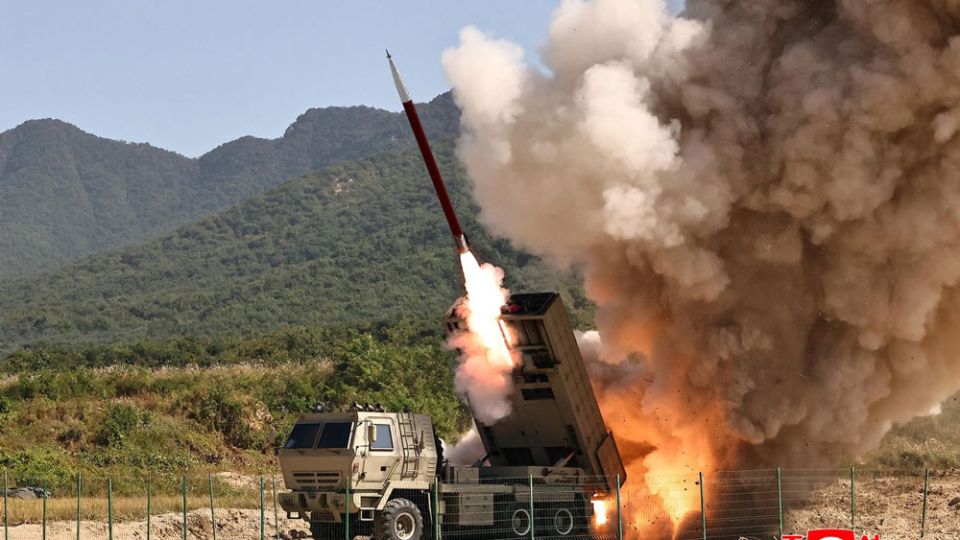
North Korea announced on Thursday that it had carried out a successful test of an improved 240 mm multiple-launch rocket system, boasting increased range and accuracy. Pyongyang simultaneously urged that its most powerful weaponry be stationed along the border with South Korea.
The test took place on Tuesday and featured newly developed guided rockets that North Korea says can travel up to 115 kilometers, significantly expanding the strike zone of its frontline artillery. The details were reported by the state-run Korean Central News Agency (KCNA).
Technical Advances
The upgraded rockets reportedly use what Pyongyang describes as an "autonomous pinpoint guide system." According to KCNA, the weapons can hit targets at 100 km along a ballistic trajectory and extend to 115 km through a hybrid glide flight mode.
Senior military officials who supervised the trial said the longer-range rockets would bring a "significant change" in combat readiness along what North Korea refers to as its "southern border."
Pak Jong-chon, vice chairman of the Central Military Commission under the ruling Workers' Party, emphasized the importance of massing the North's "deadliest and destructive attack forces" at the border, KCNA reported. Pak also said Pyongyang wanted its adversaries to understand that it had rapidly replaced older long-range strike assets with newer systems.
Wider Threat Range
Yang Moo-jin, a distinguished professor at the University of North Korean Studies, said the upgrade represents a major leap over the older 240 mm rockets, which had a range of roughly 70 km and were primarily seen as a danger to the greater Seoul area.
With the extended 115 km range, the system could potentially target key US military bases in Pyeongtaek and Osan, as well as portions of northern Chungcheong Province, Yang noted.
He described the blend of extended range, precision guidance, and a maneuvering glide trajectory as a shift from basic artillery rockets toward more advanced precision-guided munitions. The glide capability, he added, may be designed to make interception harder for South Korea's layered missile defense network protecting the Seoul metropolitan region.
Mass Production and Export Potential
Yang pointed out that the rockets are far cheaper to manufacture than ballistic missiles, which could enable North Korea to produce them in large quantities and quickly deploy them to frontline units. He also suggested that if the system proves its effectiveness, Pyongyang might market the guided rockets internationally as an affordable weapons option to bring in foreign currency.
Rising Tensions on the Peninsula
The test comes amid North Korea's broader push to bolster its offensive capabilities against the South, a drive that has intensified since Pyongyang declared inter-Korean relations to be between "two hostile states" in late 2023.
Yang warned that the North's focus on maintaining constant military pressure signals a shift toward a more aggressive deterrence posture. The growing concentration of advanced firepower near the border risks deepening the arms race between the two Koreas and raises the prospect of minor incidents spiraling into localized conflict, he said.
South Korea's military confirmed it had tracked multiple projectiles launched by the North toward the Yellow Sea on Tuesday and was analyzing the tests. Seoul said it remains fully prepared to respond to any provocation and is closely monitoring Pyongyang's military activities in coordination with the United States.