North Korea Showcases Enhanced Rocket System, Calls for Heightened Border Firepower
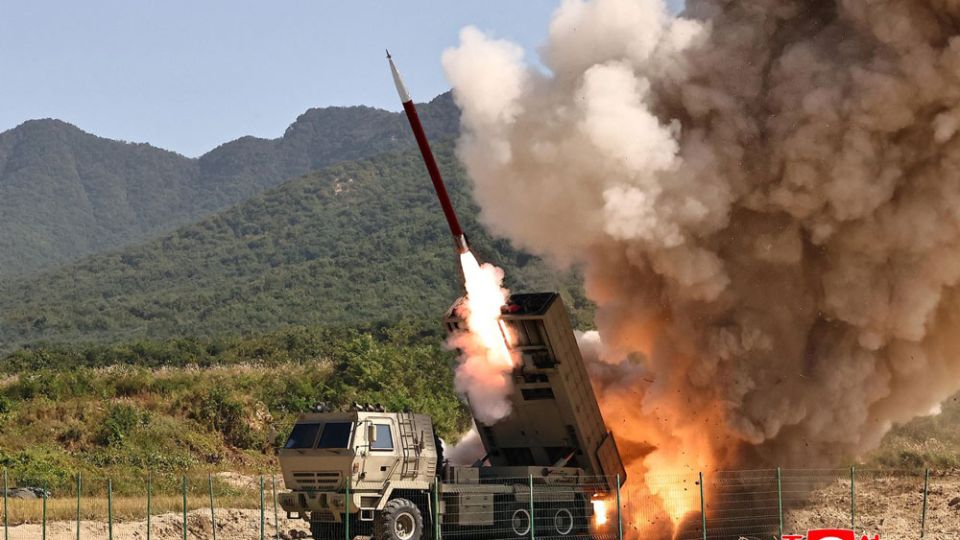
North Korea announced the successful test of an upgraded 240 mm multiple-launch rocket system, claiming it now possesses greater range and precision. The nation also urged the deployment of its most powerful weapons along the border with South Korea.
According to the state news agency, the test on Tuesday involved newly developed guided rockets. These rockets allegedly can reach targets up to 100 kilometers away in a ballistic arc and extend their range to 115 kilometers using a glide trajectory. Pyongyang says the system features an "autonomous pinpoint guide system."
A senior military official stated that the extended-range rockets would bring about a significant change in firepower readiness along what North Korea terms its "southern border." Pak Jong-chon, a senior Workers' Party official, emphasized the need to concentrate the "deadliest and destructive attack forces" in that area. He also highlighted the importance of adversaries recognizing the accelerated replacement of older systems with these new weapons.
An analyst noted the system represents a major upgrade over older 240 mm rockets, which had a range of about 70 km and primarily threatened the Seoul area. The new system's potential 115 km range could now reach major U.S. military bases in Pyeongtaek and Osan, as well as parts of a northern province.
This evolution combines extended range, precision guidance, and a maneuvering glide path, moving toward more sophisticated weaponry. The glide capability is also seen as a way to complicate interception efforts by South Korea's missile defense systems for the capital region.
Due to their relatively low production cost compared to ballistic missiles, these rockets could be mass-produced and rapidly deployed to frontline units. Some suggest North Korea might also seek to export the cost-effective system to generate foreign currency.
The development follows a 2023 declaration that inter-Korean relations are now between "two hostile states." An expert interpreted the latest rhetoric as a shift toward a more offensive and coercive concept of deterrence. This build-up along the border risks intensifying the arms race and could increase the danger that minor clashes escalate into larger conflicts.
South Korea's military confirmed it tracked projectiles fired toward the Yellow Sea on Tuesday and is analyzing their characteristics. The South Korean military stated it remains prepared to counter any provocation while closely monitoring North Korean activities in coordination with the United States.