Peace Must Be Rooted in International Law: A Cambodian Perspective on Thailand's UN Remarks
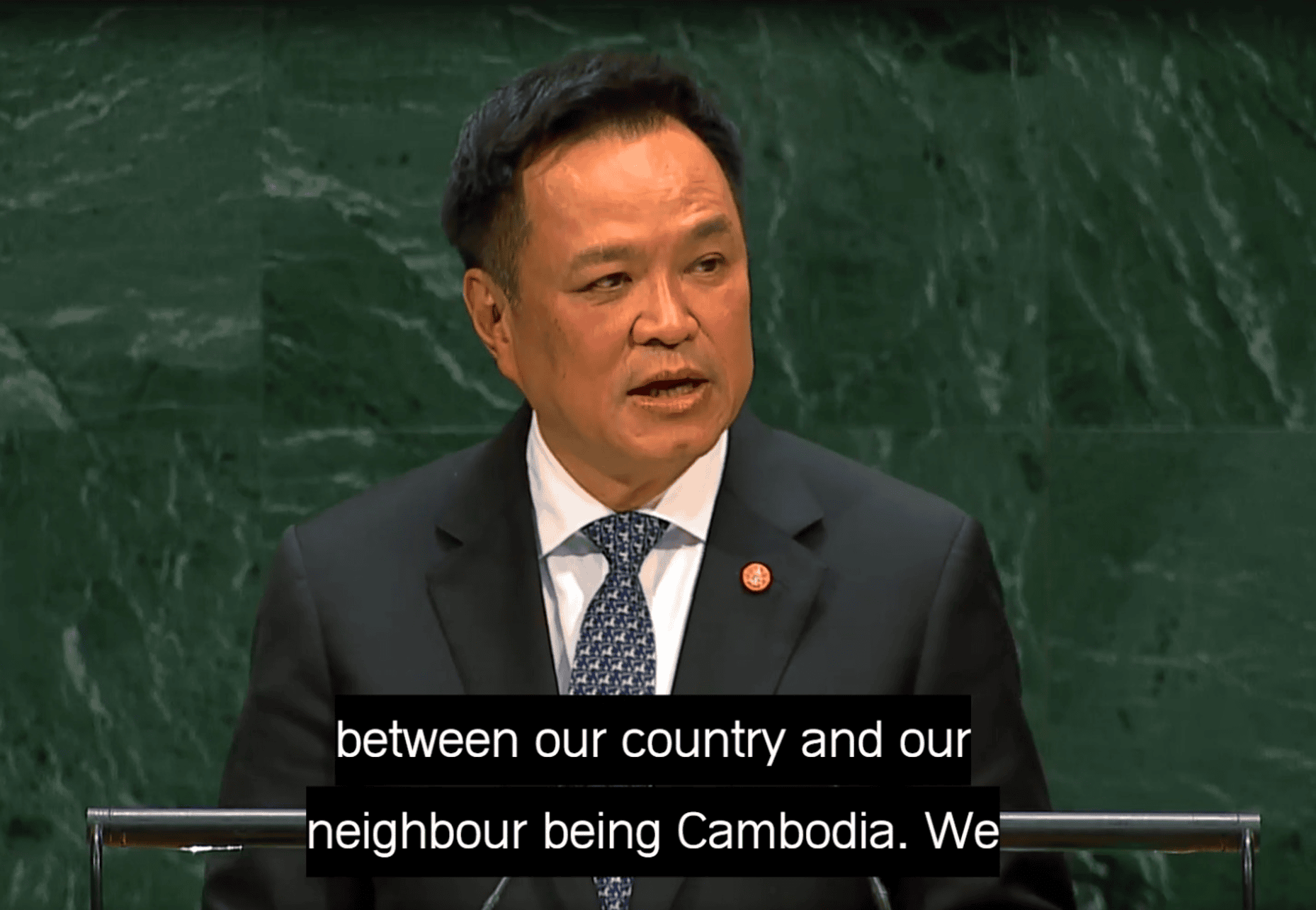
Thailand's Prime Minister told the UN General Assembly in late September that his country has never pursued conflict and urged Cambodia to make sincere efforts toward peace. As a Cambodian citizen, I welcome any genuine appeal for peace. Cambodia has no desire for war. Yet lasting peace demands more than polished diplomatic language. It calls for respect for sovereignty, adherence to international law, observance of existing agreements, credible evidence, and equal treatment of all nations.
If Thailand truly wants peace, both sides should settle their differences through dialogue, independent verification, and peaceful legal channels rather than political pressure, military threats, or competing versions of events.
Online Scams and Territorial Sovereignty Are Separate Matters
Thailand is within its rights to raise the serious problem of online fraud and transnational crime on the world stage. Cambodia should also work with others to fight criminal networks, support victims, and improve cross-border law enforcement.
Still, online crime and territorial sovereignty are fundamentally distinct. Online scams involve criminal activity that crosses borders, while territorial disputes concern borders, sovereignty, historical agreements, maps, and international law. One issue should not be used to eclipse or replace scrutiny of the other.
I do not claim, without proof, that Thailand intends to shift international attention away from territorial questions. Motives should be established through evidence rather than assumptions. Even so, the international community has a duty to examine both issues independently and fairly. If Thailand wants international bodies to hear its concerns about online crime, Cambodia deserves the same opportunity to present its own concerns about sovereignty and territorial integrity. This is not hostility toward Thailand; it is a request for equal treatment under international law.
Peace Requires Evidence and Independent Verification
Some countries sit far from the Cambodian-Thai border and may not fully grasp the realities on the ground. Their understanding may rest on government statements, media coverage, historical documents, maps, and other material supplied by the parties themselves.
For that reason, international institutions should review relevant treaties, historical agreements, established international legal rulings, independently verified information, and the experiences of affected communities. No government should expect its narrative to be accepted without scrutiny. Cambodia, too, must be ready to submit its claims and actions to independent examination. International justice requires that all relevant evidence be weighed, no matter which country presents it.
A Shared Responsibility for Peace
The Thai prime minister's call for peace offers both countries an opportunity to strengthen peaceful mechanisms. That work should include:
- Respect for international law and existing agreements
- Meaningful dialogue and restraint
- Independent verification of disputed facts
- Protection of civilians living along the border
- Use of appropriate bilateral and international dispute-settlement mechanisms
Peace should not hinge on military strength, economic power, or diplomatic influence. It should rest on rules that both sides respect. If Thailand has never sought conflict, as its leader stated, that commitment should be visible in actions that lower tensions and support peaceful solutions.
The Cambodian and Thai People Deserve Peace
The Cambodian people do not need another war, and neither do the Thai people. Communities on both sides of the border deserve security, dignity, economic opportunity, and freedom from fear.
Governments may disagree about history, territory, and legal interpretations, but ordinary Cambodians and Thais should not become enemies because of unresolved disputes between their governments. Cambodia and Thailand can cooperate against online crime while addressing territorial questions through appropriate legal and diplomatic channels. These responsibilities do not conflict with one another.
The UN should hear both countries, examine the evidence impartially, and ensure that international law applies equally to powerful and less powerful states alike.
A Final Appeal
As a Cambodian citizen, I am not calling for confrontation with Thailand. I am calling for truth, evidence, dialogue, accountability, and respect for international law.
I respect the Thai people, just as I expect Thailand to respect the Cambodian people. Lasting peace cannot be built by dodging difficult questions or letting one issue overshadow another. If Thailand genuinely seeks peace, Cambodia should welcome that message. But peace must be proven through conduct, not words alone.
Let both countries strengthen peaceful mechanisms. Let disputed facts be independently examined. Let sovereignty be respected and international law apply equally to all.
Peace must not mean silence. Peace must mean justice. And justice must begin with equal respect for international law.