
Philippines Blocks Two Websites Accused of Grooming Minors Toward Real-World Violence
MANILA – The National Telecommunications Commission (NTC) has ordered internet providers to block two websites that authorities say were being used by "groomers" to push minors into committing crimes in the real world. Officials pointed to a possible connection between the sites and a recent wave of school violence, including three campus shootings this year that killed eight students and injured at least 28.
During a press briefing on Monday, Philippine National Police spokesperson Col. Allen Rae Co explained that the NTC instructed internet service providers (ISPs) to make the sites unavailable within the country, acting on a request from the PNP Anti-Cybercrime Group.
"These websites promote real-world violence. They groom children and hand them tasks, beginning with simple ones and escalating until they involve shooting and hurting people in real life," Co said. He confirmed that access had already been cut off through the ISPs.
Citing the ongoing investigation, Co declined to reveal further details about the websites. When asked whether they were linked to recent incidents involving young people, he responded that the sites "definitely influenced incidents that happened recently."
He added that the PNP is now searching for other online platforms spreading real-world violence on social media, saying, "We are doing everything to check if there are others grooming our young people."
Online Threats
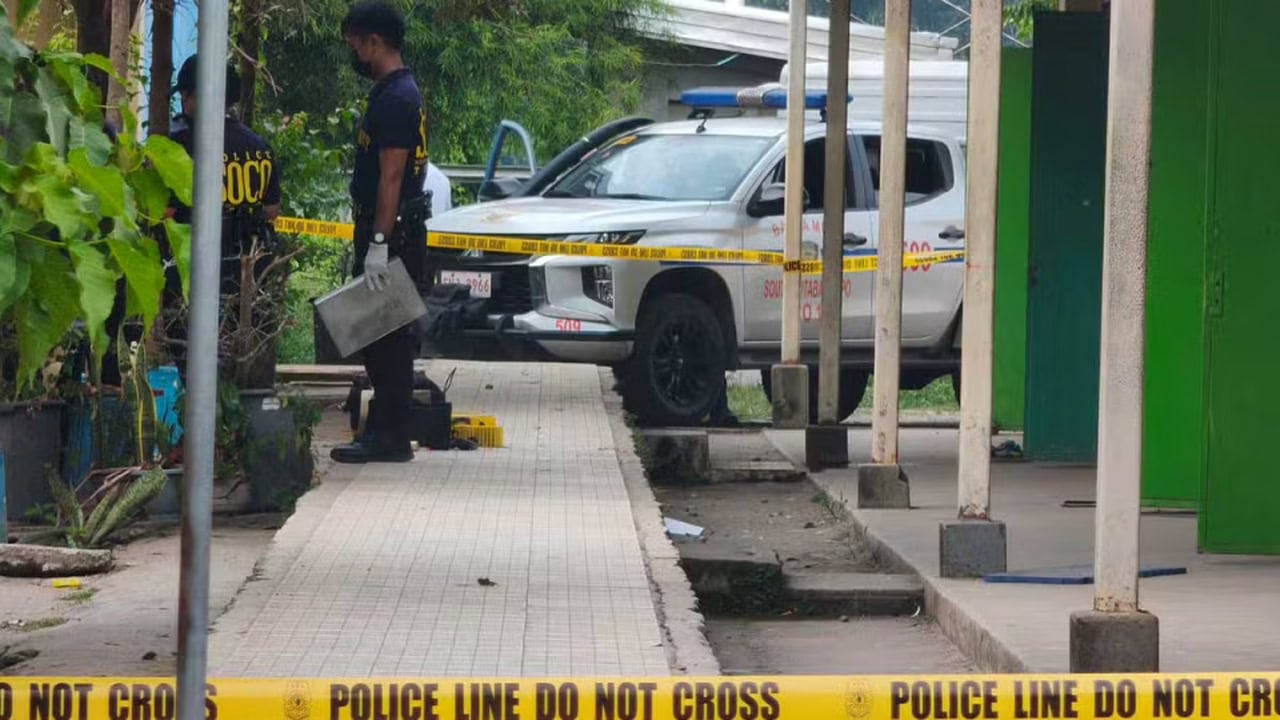
PNP chief Gen. Jose Melencio Nartatez Jr. called on the public to be responsible on social media after authorities acted against seven students and one adult over alleged online threats made following the Sept. 18 shooting at Banga National High School in Banga, South Cotabato. That attack left three students dead—including the shooter—and six others wounded.
"Let this be a reminder that social media is not a place to make threats or create fear," Nartatez said. "Just because a post was made online, it doesn't mean it has no real-life impact."
According to South Cotabato Gov. Reynaldo Tamayo Jr., two 16-year-olds and an 18-year-old were arrested separately in the province on Sunday after allegedly threatening to harm fellow students in a manner similar to the Banga shooting.
Tamayo said charges were being prepared against the minors, though authorities would first seek clearance from the Department of Social Welfare and Development (DSWD) given their ages. Provincial legal officers were also reviewing whether the parents could face charges.
In Sultan Kudarat, police questioned a 13-year-old student, referred to only as "Jaf," who allegedly posted photos of firearms and threatened to stage a shooting at Kapingkong National High School.
Maj. Jayson Ortega, Lambayong municipal police chief, said the case was being handled carefully because of the student's age. A teacher, the student's family, and a social welfare officer attended the questioning.
No Connection
Also in Sultan Kudarat, police in Esperanza questioned two students and an adult who appeared in a viral video handling what looked like a firearm after the Banga shooting. The students were brought to the station by their parents, and the adult was questioned as well.
However, Brig. Gen. Alan Manibog, Soccsksargen regional police director, said the video had actually been filmed in July and was neither connected to the Sept. 18 incident nor meant as a threat.
In Baguio City, police and education officials are looking into an alleged gun threat at Lucban Integrated School involving a 13-year-old Grade 8 student.
School principal Felto Agpawa said the student allegedly pointed a non-functioning firearm at a classmate on Sept. 16. The three students involved were sent for psychosocial evaluation and then referred to the DSWD for further monitoring.
Baguio police chief Col. Nixon Laoyan said the firearm did not belong to police or any uniformed personnel. The school, which enrolls 2,399 students but has only one security guard, has since strengthened security with help from parent volunteers.
Authorities have increasingly examined how social media may be fueling the recent surge in school violence.
In June, the Cybercrime Investigation and Coordinating Center temporarily banned the video game GoreBox after two students opened fire at San Jose National High School in Tacloban City, killing three classmates and wounding 20 others. One of the shooters, a 14-year-old, reportedly played the online game frequently; it features weapon simulation and graphic violence.
On Aug. 18, a 14-year-old student at Ateneo de Zamboanga University brought his father's gun to campus, shot an older schoolmate, and then turned the weapon on himself. Two other students were injured.
The shooter broadcast his actions on Facebook Live. Although the stream was removed within minutes, footage spread rapidly across other websites. In response, telecom giant PLDT Inc. announced it would block more than 100 websites found to be streaming or hosting videos of school shootings and "other acts of extreme violence."
Interior Secretary Jonvic Remulla suggested the shooter may have been influenced by the gaming platform Roblox. An examination of his phone and laptop also revealed a browsing history of sites allegedly containing hate speech.