PM Pledges Permanent Status for Border 'Waiting Villages' Even After the Dispute Is Resolved
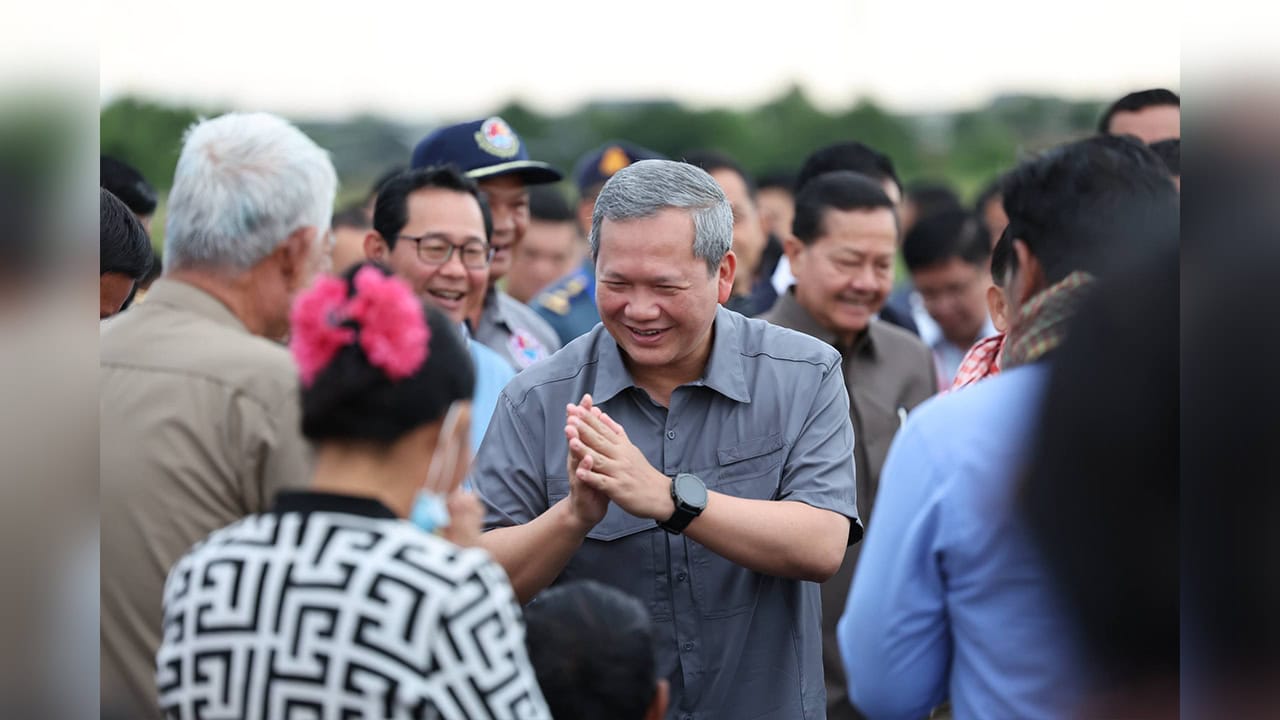
Prime Minister Hun Manet has promised families displaced by the border conflict with Thailand that the new resettlement villages will remain permanent communities, even if residents eventually return to their original homes and farmland once the territorial dispute is settled.
Manet said some land has already been allocated to displaced households. That gives them a base to build new livelihoods and keep developing their villages while the dispute remains unresolved.
He made the remarks at a ceremony in Battambang province on October 30, where rice seed and food were handed out to families affected by flooding. Around 20,000 Cambodian civilians from border areas still cannot go back to their homes after the armed clashes, which Cambodia has described as "Thai military aggression."
Reflecting on recent visits to displaced communities in Srah Kaev village in Oddar Meanchey province and Ta Keung Baitong village in Preah Vihear province, where about 700 displaced families are staying, Manet said the new settlements should serve as lasting reminders of the suffering caused by war and of the resilience of Cambodian families rebuilding their lives.
"Even if we resolve the border issue in the future and people return to their original land, these villages will remain, because part of the land has already been given to them. They will keep building and expanding these communities," he said.
According to Manet, the settlements are meant to offer far more than temporary shelter. Land allocations and livelihood support are designed to help displaced families establish communities that can sustain themselves.
He said nearly 6,000 houses have been built for displaced residents in just a few months. About 3,000 of them are in Banteay Meanchey province, with more in Oddar Meanchey and Preah Vihear.
Manet argued that families cannot be expected to live in tents indefinitely while negotiations over the border dispute continue.
Housing and land are only part of the effort. The government has also launched livelihood programmes in the new settlements covering vegetable farming, livestock raising and small businesses. Manet recalled meeting families who had moved into their homes just three months earlier and were already growing vegetables, raising animals and running small grocery shops.
He also pointed to the Land Allocation for Social and Economic Development (LASED) programme, which is supported by the World Bank, along with other land distribution initiatives aimed at landless households.
On the unresolved dispute, Manet reaffirmed Cambodia's commitment to diplomacy and legal channels rather than renewed military confrontation. He stressed that protecting the lives of civilians and soldiers remains the top priority.
He rejected suggestions that seeking peaceful solutions is a sign of weakness or an abandonment of Cambodian territory.
"Let anyone who wants to call us cowards do so. We are not running away from the problem. We are confronting it head-on, but we are starting with diplomatic and legal tools to resolve it," he said.
The prime minister stressed that war affects far more than the armed forces. It disrupts border economies, damages livelihoods and leaves unexploded ordnance that continues to endanger communities long after the fighting stops. He said some families in border provinces still keep their belongings and farm vehicles packed and ready to leave, fearing that fighting could break out again.
Manet also defended the government's preference for a lasting settlement over a quick agreement that might collapse and fail to prevent another clash.
"If we can resolve it quickly and properly, that would be good. But if a quick solution does not end the problem, and taking a bit longer can settle it permanently, then we should accept taking more time. What matters is ending it once and for all," he said.
Manet also pledged to visit displaced families in Rong Cham village in Banteay Meanchey province, after his earlier trips to Oddar Meanchey and Preah Vihear. He said he had received a message from a woman in Rong Cham who noted that he had visited displaced residents in other provinces but had not yet come to her community.
"I will certainly go there. I may even visit quietly without announcing it in advance," he said.
Manet reiterated that the government will keep supporting families affected by the conflict through housing, land allocation and livelihood assistance while efforts to resolve the territorial dispute continue. His remarks were meant to reassure displaced residents that they can rebuild their lives in new communities without giving up on returning to their original homes and farmland.