Pursat Tightens Irrigation Controls as Drought Fears Grow
Pursat provincial governor Khoy Rida has announced stricter controls on irrigation water as local authorities prepare for a possibly long drought linked to the El Niño weather pattern. The move reflects growing concern about water availability during the coming dry season.
Rida has directed local officials to get farmers who have already harvested their rice to agree to pause any further planting. The goal is to protect reservoir supplies for households, livestock, and hundreds of families whose crops have already been hurt by water shortages.
Speaking to reporters, Rida said the provincial government has drawn up contingency plans for both flooding and drought. The plans take into account the province's terrain, its irrigation network, and its reservoirs.
He said recent government investment in dams and large reservoirs has improved Pursat's ability to supply water for homes, livestock, and farming. He admitted, however, that the province's two main reservoirs are in different states. One is full, while the other is still below capacity because water has been accumulating unusually slowly this year.
Authorities are therefore prioritizing essential needs, especially drinking water for households and emergency aid for farmers whose crops have already been damaged.
Rida said that farmers who have finished harvesting must first agree not to plant another crop. Anyone who plants without enough water, he warned, will not receive irrigation water. He stressed that holding back water is a necessary safeguard for people and animals if the drought lasts a long time.
The restrictions on new rice planting do not mean all water releases will stop. The province plans to keep supplying water to selected communes where crops have already been damaged, namely Svay Angkeo, Ou Sandan, Me Tuek, and Boeung Khnar. Rida noted that the damage affects specific plots within those communes rather than every field, but several hundred families there still need water to recover their crops.
A major challenge, according to Rida, is making sure water reaches downstream communities instead of being diverted by farmers near the head of the canal network. Authorities will monitor canals to stop unauthorized pumping for new crops, particularly in upstream areas. If upstream farmers begin another planting, he said, the water will never reach those downstream.
To enforce the measures, Rida has instructed village, commune, district, and municipal officials to work directly with farmers who have completed their harvests. Officials are to secure agreements to suspend planting and explain why conserving water matters.
He called on residents to understand the situation. If weather conditions and limited reservoir supplies continue this way, he said, farmers may no longer be able to grow one crop after another as they have in past years.
Pursat is an important farming province, with large rice fields, a range of other crops, and irrigation systems that rely partly on water from the Cardamom Mountains and stored in reservoirs. Careful dry-season water management is vital to the local farm economy, especially when many farmers need irrigation at the same time and reserves are limited.
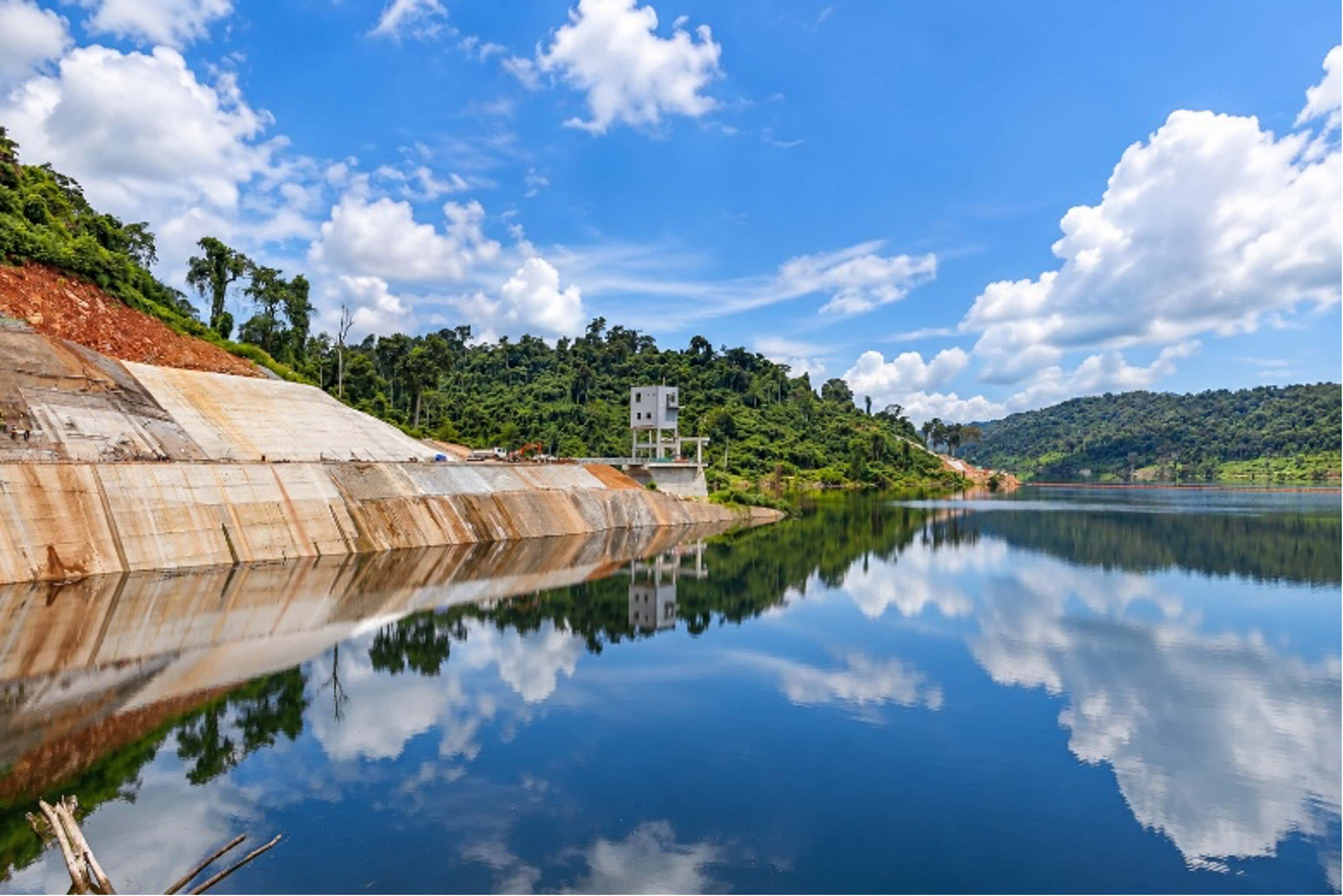
Rida also hopes the Stung Pursat 1 Hydropower Project, scheduled to begin operating in November, will help with emergency water management as well as electricity generation. Located in Veal Veng district, the 80-megawatt project is part of wider efforts to develop energy and water infrastructure in the Cardamom Mountains. He said that once the dam is running, it will produce power and also free up some water for emergency use.
He cautioned, however, that even with additional water sources, irrigation may not be able to support farming on the same scale as in years with plentiful rain.
El Niño can shift rainfall patterns and increase drought risk in parts of Southeast Asia, which makes conserving water especially important before the dry season. Rida urged farmers to cooperate with local authorities so that water reaches the communities in greatest need while enough reserves are kept for the months ahead.