Pyongyang Claims Successful Test of Enhanced Long-Range Rocket System
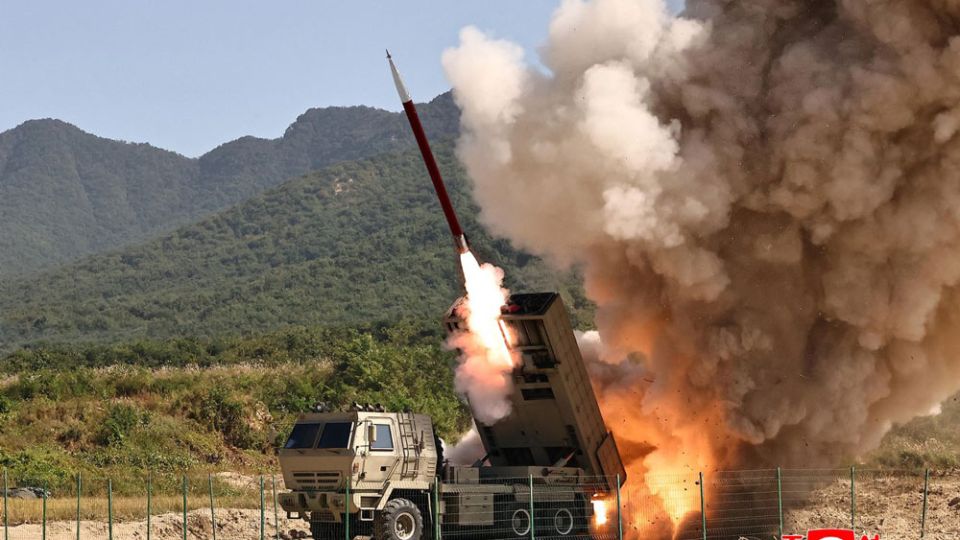
North Korea announced on Thursday that it has completed testing of an improved 240mm multiple-launch rocket system, featuring extended range and enhanced accuracy. Officials simultaneously called for positioning the country's most powerful weaponry along its southern frontier.
According to the state-run Korean Central News Agency, Tuesday's trial involved recently developed guided munitions capable of reaching distances up to 115 kilometers, potentially expanding the threat zone for frontline artillery strikes.
The enhanced rockets feature what Pyongyang describes as an "autonomous pinpoint guide system." KCNA reported that these weapons can hit targets at 100 kilometers using a standard ballistic arc, while a hybrid glide flight pattern extends their maximum reach to 115 kilometers.
Military commanders supervising the trial indicated that deploying these extended-range munitions would fundamentally alter firepower positioning along what the North terms its "southern border."
Pak Jong-chon, who serves as vice chairman of the Central Military Commission within the ruling Workers' Party, emphasized the imperative to "concentrate the deadliest and destructive attack forces on the southern border," KCNA stated.
Pak further stressed the importance of demonstrating to adversaries that Pyongyang has been rapidly modernizing its long-range strike capabilities with cutting-edge weapons platforms, according to the report.
Yang Moo-jin, a distinguished professor at the University of North Korean Studies, characterized the system as a substantial advancement over earlier 240mm rockets, improving both operational range and precision-strike potential.
Previous generations had an approximate 70-kilometer range and primarily threatened the Seoul metropolitan region. The upgraded system's 115-kilometer capability could potentially place major American military facilities in Pyeongtaek and Osan within striking distance, along with portions of northern Chungcheong Province, Yang explained.
He noted that combining extended range with precision guidance and maneuverable glide trajectories represents a transition from traditional artillery rockets toward more advanced precision-guided munitions.
The glide functionality may also be designed to challenge South Korea's layered missile defense infrastructure protecting the capital region by complicating interception efforts, Yang suggested.
Yang pointed out that the weapon's comparatively modest production costs relative to ballistic missiles could enable North Korea to manufacture the rockets in large quantities and rapidly deploy them to forward units.
Should the system prove its effectiveness, Pyongyang might pursue exporting these guided rockets as an economical weapons platform to generate hard currency, he added.
This development follows North Korea's growing focus on enhancing its strike capabilities against South Korea since characterizing inter-Korean relations as existing between "two hostile states" in late 2023.
Yang observed that Pyongyang's focus on maintaining sustained military pressure on adversaries indicates a movement toward a more aggressive and coercive deterrence strategy.
The accumulation of increasingly sophisticated firepower near the inter-Korean boundary could intensify the arms competition between the two nations and heighten the danger that even minor incidents could spiral into limited military clashes, he warned.
South Korea's military confirmed detecting multiple projectiles launched by the North toward the Yellow Sea on Tuesday and stated it was analyzing the launches to assess their specifications.
Seoul reported maintaining readiness to respond to any North Korean provocations while closely monitoring Pyongyang's military activities in partnership with the United States.