Reclaiming Khmer Contributions to Southeast Asian Civilization
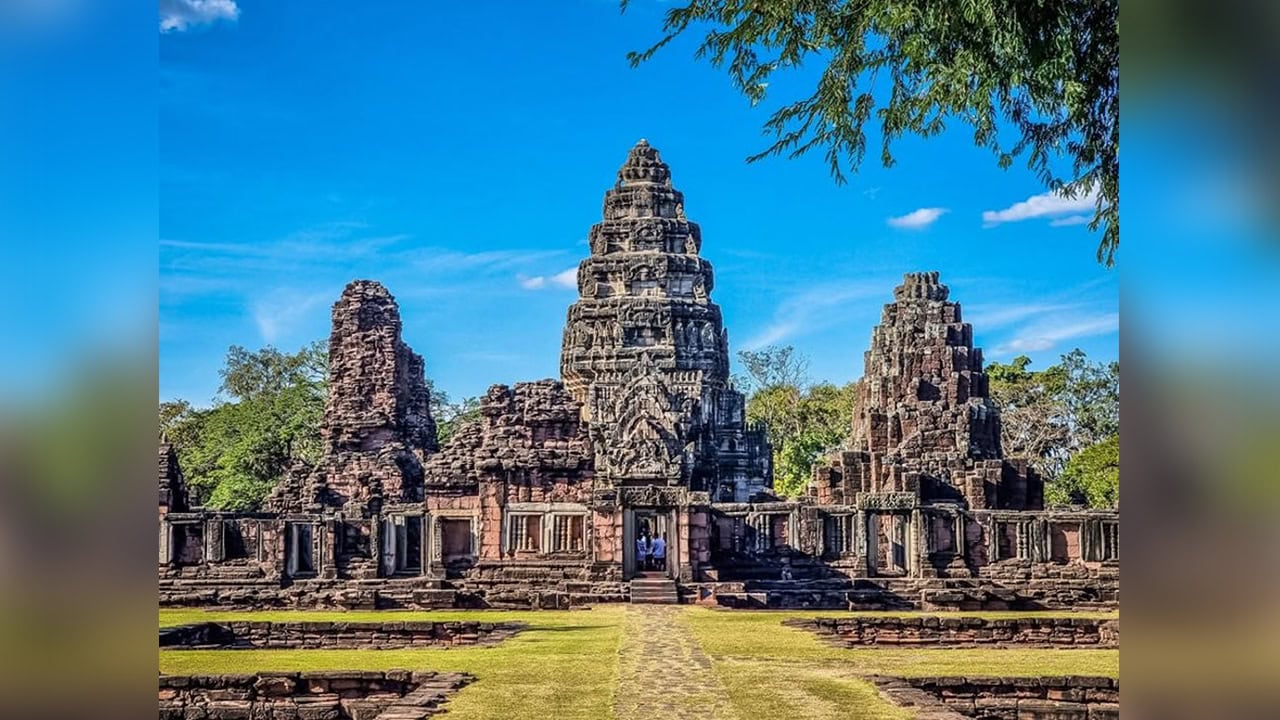
Ancient history transcends modern political boundaries, yet this basic principle often gets overlooked when discussing Southeast Asia's cultural past. In recent years, scholars and observers have raised concerns about what they term "Thailandisation"—a process where governments and commercial interests retroactively attribute the region's shared, complex heritage exclusively to Siamese culture while erasing the foundational roles of Khmer, Mon, and Indian influences.
Mainland Southeast Asia's history was never a story of a single nation. For centuries, diverse kingdoms and peoples across river valleys interacted through trade, migration, conflict, marriage alliances, and the steady flow of ideas and artistic traditions. The Mon kingdoms of Dvaravati brought early Buddhist teachings to the region, while the Khmer Empire developed a sophisticated civilization whose administrative systems, religious practices, and architectural innovations spread across vast territories. Later Thai kingdoms, including Ayutthaya, inherited and synthesized these traditions—incorporating Khmer administrative practices, Hindu-Brahmin ceremonies, and the royal language—while creating their own cultural contributions. This cultural evolution was reciprocal and continuous.
The issue emerges when contemporary states use modern national boundaries as a lens to reinterpret ancient history, effectively claiming exclusive ownership of a shared cultural inheritance.
The physical evidence makes this tension unavoidable. Archaeological remains, temple inscriptions, and stone carvings cannot be reinterpreted to suit political agendas. Major temples across the Khorat Plateau, including Phimai and Phanom Rung, were deliberately constructed as components of the Angkorian administrative network. Their inscriptions in Old Khmer and Sanskrit directly reference Khmer imperial authority and patronage.
Acknowledging that these structures originated within the Khmer cultural sphere does nothing to undermine Thailand's legitimate modern sovereignty. Contemporary territorial control derives from twentieth-century treaties and international law, while cultural origins are determined by language records and archaeological evidence. Conflating these two categories damages the credibility of historical scholarship.
The linguistic record presents equally clear evidence. Much of formal Thai vocabulary used in government, religion, and court ceremonies descends directly from Old and Middle Khmer. Similarly, classical Thai dance forms, textile patterns, and ceremonial imagery are documented in Angkorian stone carvings from centuries before modern nation-states took their present shape. Recognizing these connections does not diminish Thai cultural accomplishment—it demonstrates the remarkable synthesis that enabled Siamese civilization to flourish. Cultural adaptation is fundamental to human societies; deliberately erasing its sources, however, amounts to historical distortion.
As global perceptions of heritage increasingly depend on tourism marketing, digital platforms, and state-promoted cultural campaigns, rigorous historical scholarship becomes more essential than ever. Commercial promotion should never supersede peer-reviewed research in archaeology and linguistics. Shared heritage need not imply identical origins, and it certainly does not justify severing ancient artistic traditions from their cultural creators.
Preserving Khmer historical memory does not demand exaggerated assertions or hostility toward neighboring nations. It requires only fidelity to documented facts: inscriptions, archaeological layers, written records, language analysis, and verified sources. History cannot be rebranded through marketing campaigns or social media narratives. It rests on empirical evidence—and on neighboring peoples willing to respect how history actually unfolded.