Remote Cambodian provinces to receive six new preschool classrooms
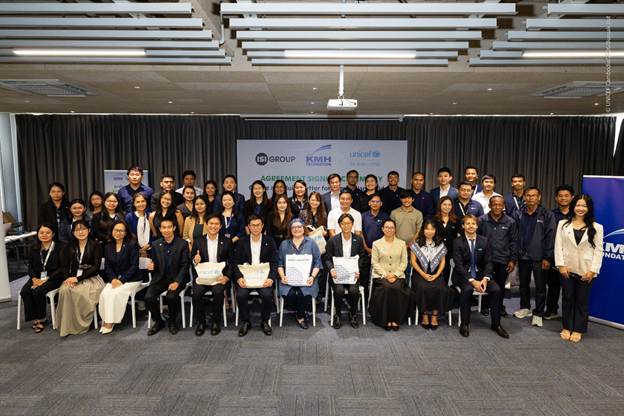
A collaborative effort between UNICEF Cambodia and the Kang Meng Huy Foundation will deliver six community preschool classrooms to underserved regions of Preah Vihear and Ratanakiri provinces, targeting areas where more than half of Cambodia's youngest children lack access to early education.
The new facilities are designed to accommodate 150 children each year in communities where infrastructure is scarce and state-run preschool programs have limited reach, according to an announcement released on October 2.
Under the terms of a contribution agreement signed by both organizations, the initiative will provide complete classroom construction along with child-appropriate furniture, educational resources, teaching materials, and outdoor play equipment.
The expansion addresses a critical gap in Cambodia's education system, where just 43 percent of three- to five-year-olds currently participate in preschool programs, leaving a substantial population without the developmental foundation necessary for successful primary school enrollment.
Maha Damaj, UNICEF's representative in Cambodia, emphasized the long-term impact of early childhood education on individual and societal outcomes.
"Foundational learning in the early years lays the groundwork for children to succeed in school and throughout their lives, shaping how they learn, grow, and eventually contribute to their communities and country," she stated.
Community-based preschools serve as a vital channel for delivering early education to rural populations, particularly where government services cannot easily reach. Cambodia currently operates more than 4,300 such facilities nationwide, though quality remains inconsistent—many function in makeshift or inadequate spaces without sufficient resources to create safe, engaging learning environments.
The six planned classrooms aim to remedy these deficiencies by equipping each location with appropriately sized furniture, teaching tools, age-suitable educational content, and playground structures that support play-based learning and the development of cognitive, social, emotional, and physical abilities.
Kang Leng, chairman of ISI Group—the parent organization of KMH Foundation—said the partnership would help broaden educational access for children in marginalized areas.
"Working with UNICEF Cambodia, KMH Foundation is proud to help expand access to quality early childhood education and give children in underserved communities a stronger start in life," he commented.
The classroom construction aligns with UNICEF's ongoing technical assistance to Cambodia's Ministry of Education, Youth and Sport, which includes teacher training programs and the provision of play-based learning materials aimed at raising enrollment and instructional standards in community preschools.
Though the new facilities will serve 150 children annually, the broader enrollment statistics highlight the scale of the challenge in ensuring preschool access for Cambodia's youngest population before they begin formal schooling.
The announcement did not disclose the project's budget, the specific communities selected for the classrooms, a timeline for construction, or details regarding teacher staffing and long-term operational funding.