Response to Thailand's UN Address: Accountability Must Precede Reconciliation
When Thailand's Prime Minister addressed the United Nations General Assembly in September 2026, he spoke of peace and collaboration. His message emphasized that Thailand seeks no conflict and that lasting peace requires genuine cooperation. While these sentiments are commendable, they stand in stark contrast to the reality experienced by Cambodian communities along the shared border.
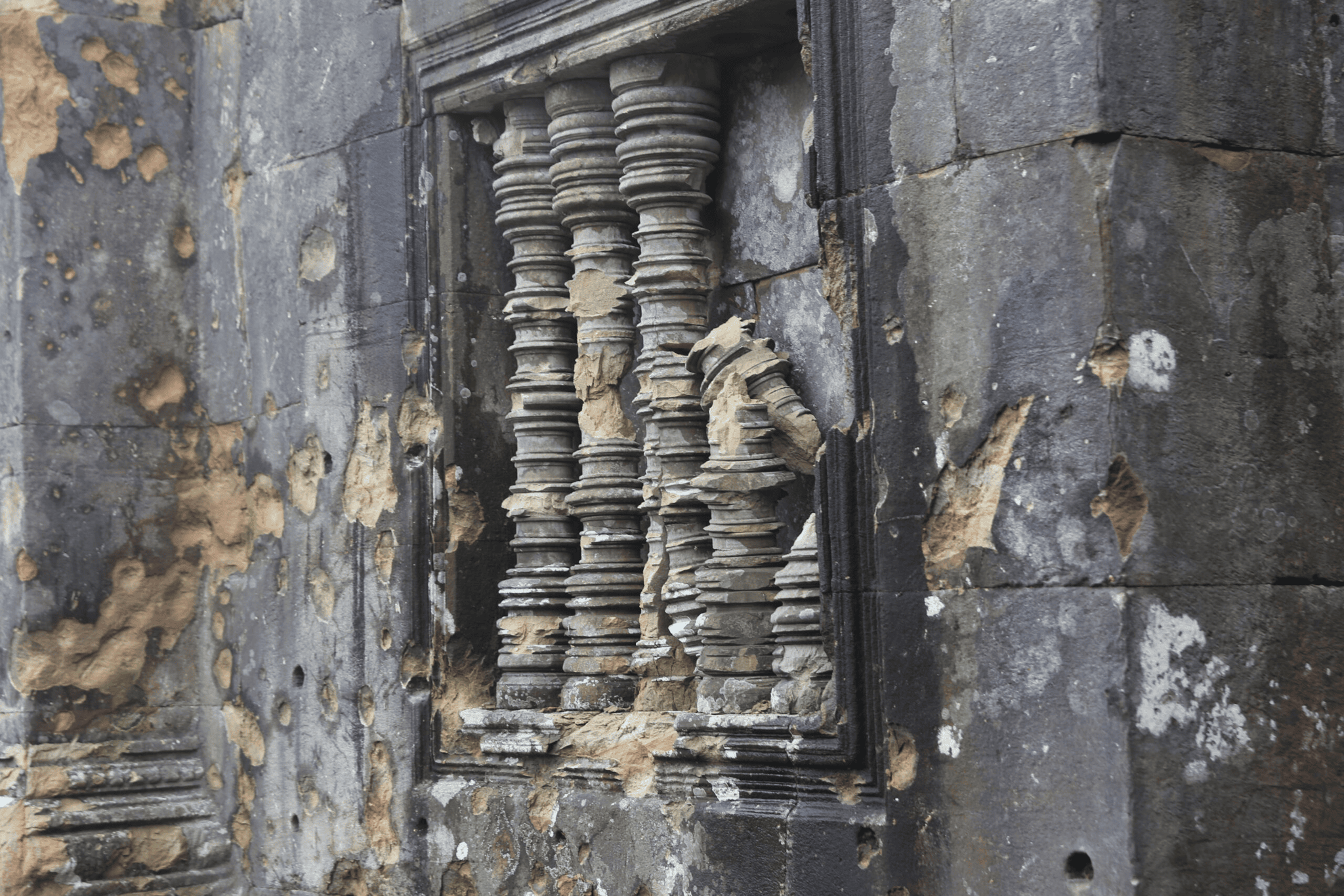
Thailand has publicly confirmed conducting military air operations within Cambodian territory. These strikes resulted in civilian deaths and injuries, forced mass displacement of populations, and caused significant damage to homes and public facilities. The historic Preah Vihear Temple complex sustained extensive damage from artillery fire, leaving visible scars on an internationally recognized cultural treasure. These are documented facts that cannot be overlooked while Cambodia faces pressure to demonstrate greater commitment to peace.
Both nations bear responsibility for examining their military actions honestly. Thailand must account for its conduct just as Cambodia should for its own. Genuine peace requires each government to acknowledge the consequences of decisions that affected people across international boundaries.
The Documentary Evidence
International news agencies documented the conflict extensively. In early December 2025, multiple sources reported Thai fighter aircraft striking targets inside Cambodia. Thailand characterized these as attacks on military infrastructure; Cambodia described them as unprovoked aggression. Four Cambodian civilians reportedly died in those initial strikes.
Thailand's military leadership publicly stated the objective was to substantially weaken Cambodia's long-term military capacity. While the two governments disputed which side reinitiated hostilities, the use of Thai airpower across the border is not seriously contested.
Subsequent reporting covered additional strikes, including acknowledged operations near Poipet. Cambodia reported bombs falling in populated areas and causing civilian injuries. Thailand maintained the intended target was a munitions facility on the periphery and that protective measures were implemented. This discrepancy warrants independent verification, though it does not alter the fundamental fact that Thai aircraft delivered ordnance onto Cambodian territory.
The human cost escalated rapidly. By January 2026, reports indicated approximately 101 deaths and over half a million displaced persons from two major periods of fighting. By May, the combined fatality count approached 150. While exact figures varied as official records were updated, the magnitude was undeniable—this constituted serious armed conflict, not merely isolated border incidents.
Disputed Narratives
Cambodia characterizes the incursion of Thai aircraft, artillery bombardment, and ground forces into its territory as an invasion. Thailand rejects this characterization, asserting self-defense. Portions of the frontier remain officially undemarcated, and accountability for specific clashes remains disputed. These questions require resolution through evidence and international law, not through allowing the militarily superior party to unilaterally define every contested location and every use of force.
This explains why Thailand's UN presentation proved difficult for many Cambodians to accept. While acknowledging the airstrikes, the speech appeared to place primary moral responsibility on Cambodia. Families who lost relatives, abandoned their homes, or witnessed destruction of sacred and public spaces naturally question how the nation that deployed fighter aircraft across the border can now position itself primarily as a victim.
This question seeks clarity about governmental and military accountability. It deserves transparent answers supported by documentation, observer access, and investigation mechanisms trusted by both parties.
Cultural Heritage as Evidence
Preah Vihear Temple is not an ordinary conflict site. This eleventh-century masterpiece of Khmer architecture holds UNESCO World Heritage designation. The International Court of Justice determined in 1962 that the temple sits within Cambodian sovereign territory, with a 2013 clarification confirming Cambodian sovereignty over the entire promontory.
When international journalists visited in March 2026, they documented stone debris, artillery impact craters, burned vegetation, and substantial damage throughout the complex. Cambodia's cultural ministry identified 142 damaged locations from July fighting and an additional 420 from December engagements.
Official reports indicated all five main gateway pavilions sustained damage, three severely. Journalists noted that independent external assessment had not yet verified the complete Cambodian damage inventory. The appropriate response to this gap is not dismissal but rather invitation of UNESCO and ICOMOS for unrestricted examination.
Thailand asserts Cambodian forces militarized the site. Cambodia contends Thailand deliberately targeted it. Rather than asking readers to judge based on political statements, an impartial examination is needed. Regardless of final findings, a Cambodian monument of exceptional global significance suffered serious damage—an outcome no responsible government should find acceptable.
Cambodia's Diplomatic Record
Cambodia participated in ceasefire agreements reached in July and December 2025, engaged through ASEAN mechanisms, and persistently sought dialogue. The UN Secretary-General urged both governments to protect civilians, honor the ceasefire, and pursue peaceful resolution channels. In September 2026, both countries entered a UN-supported conciliation process regarding their maritime boundary. Cambodia's participation demonstrates practical willingness to rely on legal frameworks when bilateral negotiations stall.
Thailand possesses every right to present evidence and protect Thai civilians. Cambodia holds identical rights. Nationalism should not shield either government from uncomfortable truths. Simultaneously, fairness requires acknowledging differences in military capability, the deployment of fighter aircraft, and where ordnance actually landed. These details are fundamental to accountability.
Necessary Commitments
If Thailand's UN commitments are sincere, it should undertake verifiable practical steps:
- Independent investigation: Support an impartial international fact-finding mechanism to examine how hostilities began, cross-border air and artillery operations, civilian casualties, and damage to civilian and cultural property.
- Complete observer access: Allow observers to examine all sensitive locations relevant to ceasefire compliance, including disputed troop positions, barriers, roads, and military installations.
- Ground status freeze: Halt new fortifications, barriers, excavation, road construction, and troop increases in disputed or undemarcated zones pending verified agreements.
- Safe civilian return: Ensure displaced Cambodian families can return voluntarily and safely, with access to homes, farmland, schools, religious sites, and community facilities.
- Heritage protection: Facilitate joint UNESCO and ICOMOS assessment of Preah Vihear and all affected heritage sites, publish findings, and contribute to restoration where responsibility is established.
- Accountability and reparations: Establish credible processes for compensation, reconstruction, and individual accountability where independent evidence confirms unlawful civilian harm or destruction.
- Legal border resolution: Resume effective demarcation work and accept adjudication, conciliation, or other peaceful settlement mechanisms for remaining disputes.
Peace cannot be constructed on rhetoric alone. It requires both nations to transparently examine their actions, accept responsibility where evidence warrants, and commit to verification mechanisms that rebuild trust. The international community watches to see whether words spoken at the United Nations translate into actions that honor both justice and reconciliation.