Sam An Seeks Pardons and Written Security Guarantees Ahead of Possible Phnom Penh Talks
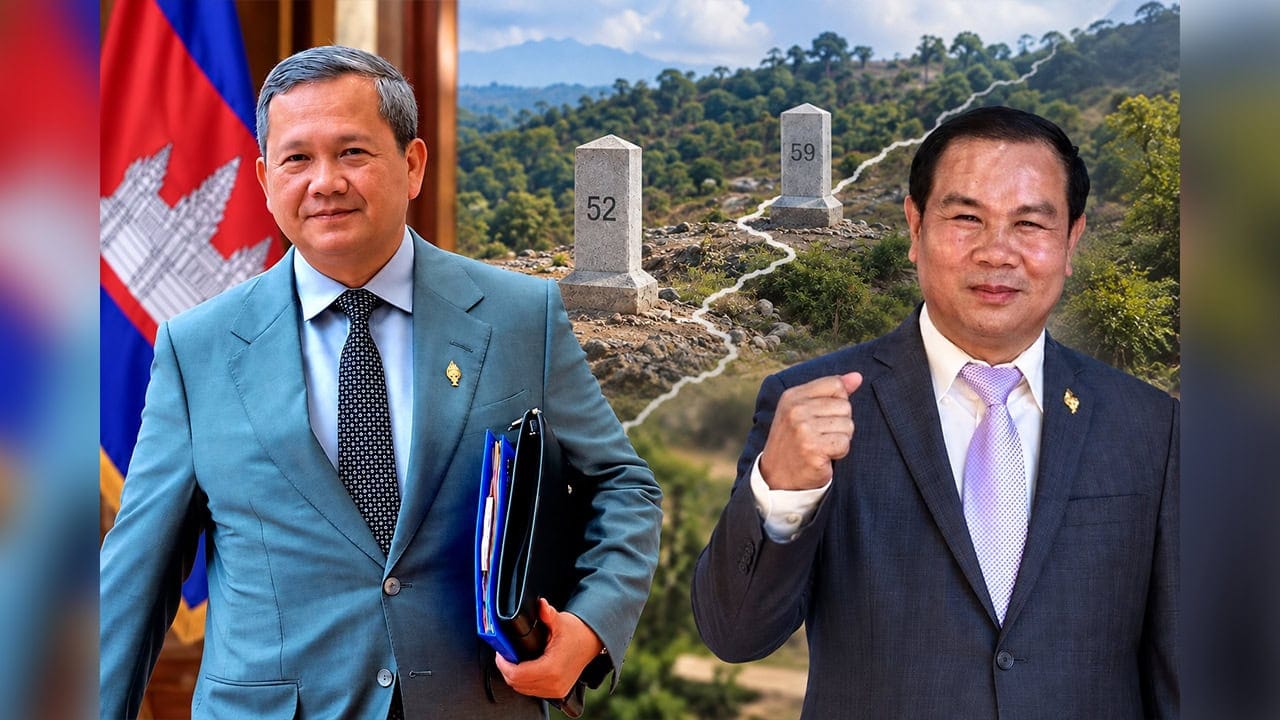
Former opposition lawmaker Um Sam An has replied to Prime Minister Hun Manet's invitation, proposing that the two sides meet in Phnom Penh during the first week of November.
The reply follows a series of public exchanges between the two men. Manet had invited Sam An to present evidence supporting his claims about temporary border markers placed between boundary pillars 52 and 59.
In a letter dated October 12, which Sam An signed and former opposition leader Sam Rainsy made public, Sam An stressed the need to find solutions to the ongoing Cambodia-Thailand border disputes. He also made several demands. He asked that criminal charges be dropped, that pardons be granted, and that written security guarantees be issued for any members of a possible delegation.
The letter was headed “Independent Cambodian Government of 23 October.” Sam An described himself as head of that group’s National Sovereignty and Border Affairs body. He said he could not decide alone whether to take part in talks with the government, and that the group would need to make a collective decision.
“I will propose that the Independent Cambodian Government of 23 October convene a meeting to consider the possibility of sending an official delegation to Phnom Penh to open discussions aimed at finding solutions in the interests of Cambodia and the Cambodian people as a whole,” he wrote.
He did not name anyone who might be part of such a delegation.
Proposed agenda
Sam An called for public discussions covering three main items, which go beyond the boundary pillars 52 to 59 issue raised in Manet’s original invitation:
- Cambodia-Thailand land boundary disputes as a whole.
- Maritime boundary disputes between Cambodia and Thailand.
- A request that the Cambodian government ask the French government for technical experts and maps to help verify the boundary and pinpoint its exact location on the ground, using cartographic evidence.
He said the three items were meant to give a full picture of the border issues, rather than focusing only on a border fence he alleged Thailand had built unilaterally between pillars 52 and 59. He proposed holding the talks between November 1 and 7, 2026, with further meetings to follow in pursuit of lasting solutions.
Sam An insisted that his proposal was not about scoring a political victory or launching personal attacks. He said his only aim was to find solutions to Cambodia’s territorial disputes.
The government’s offer and Sam An’s response
Manet had earlier invited Sam An and his team to present their documents and evidence to officials from the State Secretariat of Border Affairs. Sam An had alleged that the temporary markers between pillars 52 and 59 led to territorial losses for Cambodia in favour of Thailand. Manet rejected those claims, but pledged to guarantee the safety of Sam An and his team for the duration of their stay in Cambodia. He also offered to pay for airfare, transport and accommodation if Sam An could not afford the trip.
Sam An raised concerns about his safety and suggested holding the discussions abroad. Manet responded that the meeting should take place in Cambodia so officials could verify the disputed locations on site, in case the document review did not produce a clear result. He added that if Sam An still doubted the government’s assurances, he could ask a foreign embassy or a trusted Cambodian civil society organisation to monitor his security.
Sam An’s latest demands, which include dropped charges, pardons and written security guarantees, go further than the assurances Manet has given publicly.
Context
Cambodia-Thailand border issues remain highly sensitive, and negotiations to resolve outstanding disputes are ongoing. Claims of territorial loss or boundary violations need to be checked against legal documents, maps and other technical data. Temporary markers placed for technical purposes should also be kept separate from the formal demarcation of an international border, so that no conclusions are drawn about changes in sovereignty or territorial loss.
As of publication, the government had not responded to Sam An’s latest requests.