Saplings Planted in Rong Cham ‘Waiting Village’ to Build Greener Border Communities
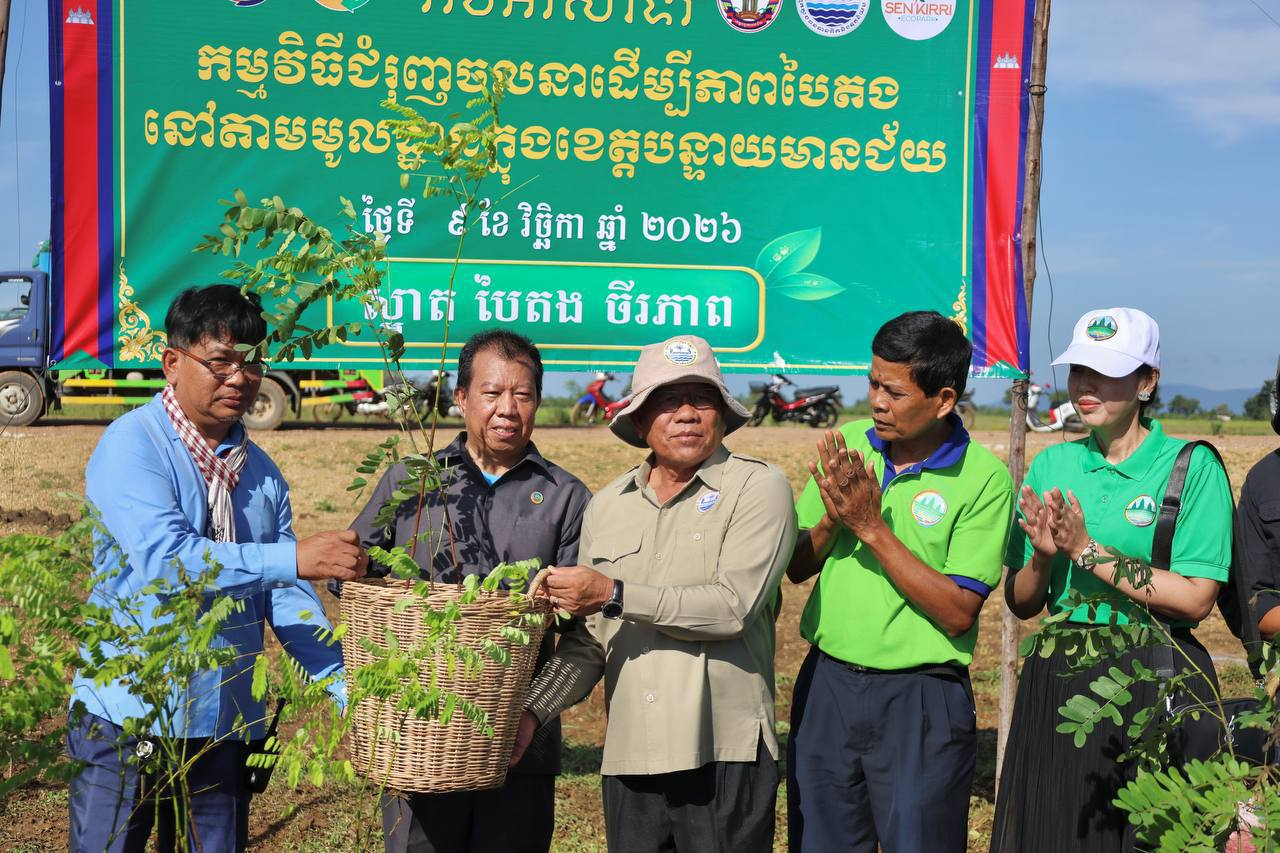
The Ministry of Environment has handed out 3,000 mixed-species saplings to residents of Rong Cham village in Svay Chek district, Banteay Meanchey province. Residents will plant them along reservoirs, canals and roads, and around their homes, with the aim of building greener communities and supporting development in border areas.
A distribution ceremony was held on November 9 in Rong Cham, a “waiting village” built to house Cambodian civilians who remain displaced by Thailand’s continued occupation of several border areas.
Ministry spokesperson Khvay Atitya said the tree planting serves several strategic goals. It supports the restoration of vegetation under the ministry’s Environmental Circular Strategy. The new cover will also act as a natural buffer, helping to absorb greenhouse gases and making communities more resilient to natural hazards.
The project is also meant to strengthen household livelihoods. Residents are encouraged to grow crops and trees around their homes, which can improve food security and reduce household expenses.
Atitya added that the trees will benefit the wider community by improving the environment, providing shade and creating better living conditions for displaced families.
He said the event showed solidarity and a shared commitment among government bodies, local authorities, residents and the private sector to developing border communities. Development, he argued, should go beyond infrastructure and include a strong “green fence” that protects the environment and improves residents’ quality of life.
The Green Sprouts Campaign
The ministry is carrying out practical projects under the “Green” pillar of its second strategic priority, including the Green Sprouts campaign. Through the campaign, it distributed more than 1.3 million saplings in 2024 and over 3.4 million in 2025. Its target for 2026 has been raised to more than five million, including 1.5 million palm trees.
To keep the seedling supply steady, the ministry has set up five large regional nurseries in key provinces. It has also stepped up patrols and efforts to prevent forestry offences in protected areas, and is using drones and satellite imagery to monitor and protect forests.
The ministry is further working with communities in protected areas to create new livelihood opportunities and green tourism destinations. The goal is to reduce pressure on forests, generate more income for local people and strengthen the conservation of natural resources.