Seoul Plans to Take North Korean Mine Blasts to the UN Security Council
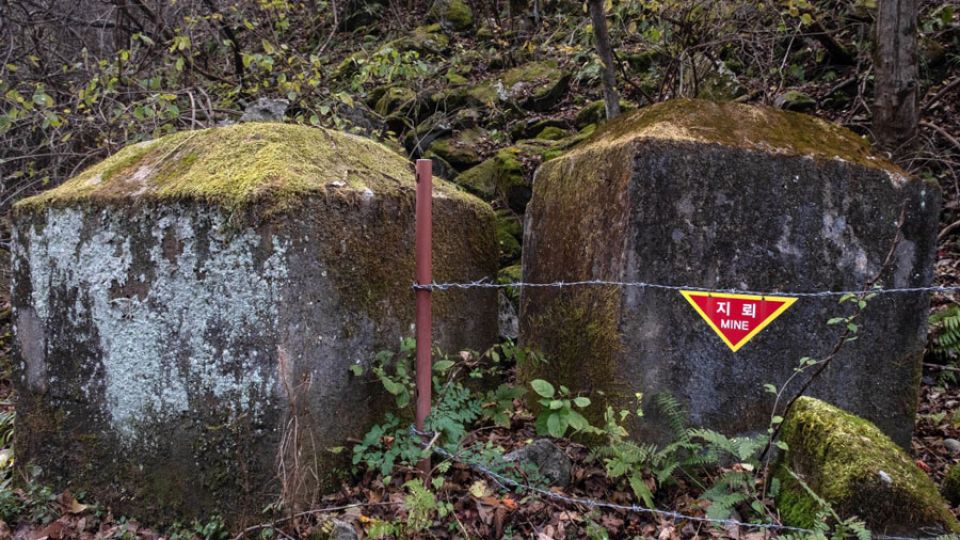
South Korea will bring North Korea’s alleged violation of the armistice that halted the 1950–53 Korean War before the UN Security Council, as Pyongyang escalates its threats against Seoul amid mounting military friction along the border.
On Thursday, Seoul’s Foreign Ministry said South Korean Ambassador to the United Nations Cha Ji-hoon will send a letter to the Security Council president in New York later that day. The letter concerns two land mine blasts on September 21 inside the Demilitarized Zone that wounded three South Korean soldiers. It will be addressed to Aglaia Balta, Greece’s UN envoy, who holds the council’s rotating presidency for October.
Ministry spokesperson Park Doo-soon told reporters at a regular briefing that the letter will state the explosions were caused by mines planted by North Korea, which he called a clear breach of the armistice. It will also demand an apology and responsible action from Pyongyang, while calling for dialogue to head off further escalation and rebuild trust.
Park added that Seoul also intends to highlight North Korea’s recent attempts to portray South Korea’s lawful military operations near the Military Demarcation Line as provocations, and to shift the blame for rising regional tensions onto the South.
The move is designed to focus international attention on the alleged violations and could pave the way for firmer Security Council action if Pyongyang carries out further provocations. Possible next steps include council discussions and, depending on members’ positions, a presidential statement or a resolution.
A Similar Step in 2015
Seoul has taken this route before. In August 2015, two South Korean soldiers were seriously injured by North Korean wooden-box land mines during a routine patrol inside the DMZ. The military said Pyongyang had deliberately planted the devices south of the Military Demarcation Line, and Seoul sent a letter to the Security Council president 14 days after the incident.
Rising Rhetoric from Pyongyang
The latest move comes as North Korean rhetoric grows sharply harsher. Kim Yo-jong, sister of leader Kim Jong-un and director of the General Affairs Department of the Workers’ Party of Korea’s Central Committee, has issued a series of statements condemning South Korean military operations near the border. She warned that Seoul would face “the most horrible and distressing situation” if it keeps criticizing Pyongyang’s conduct there.
Her remarks followed an unusual inspection on Wednesday of North Korea’s border fortification work. She was joined by Pak Jong-chon, an adviser to the North’s Ministry of National Defense, and senior military commanders. On Thursday, she threatened to put propaganda loudspeakers aimed at the South on operational alert across the border region within days, raising fears of a renewed psychological warfare campaign.
North Korea has been fortifying its southern frontier since April 2024, laying mines and erecting fences and barriers to physically separate the two sides. Its soldiers have repeatedly approached or crossed the Military Demarcation Line during this work, prompting South Korean forces to broadcast warnings and fire warning shots.
South Korea’s military and the UN Command have concluded that the September 21 explosions were caused by North Korean antipersonnel mines planted south of the line, in violation of the armistice. Pyongyang denies any responsibility.
Additional Sanctions Under Review
Separately, Seoul is still weighing additional unilateral sanctions targeting North Korea’s illicit cyber activities, despite objections from Unification Minister Chung Dong-young, who fears the measures could further strain inter-Korean relations. A Foreign Ministry official, speaking on condition of anonymity, argued that these cyber operations are a major source of funding for North Korea’s nuclear and missile programs and a threat to the global digital economy.
The official said no decision has been made and the sanctions remain under internal review, though they have not been ruled out. The official stressed that the measures are not meant as retaliation for the DMZ mine blasts. Instead, they are part of broader efforts Seoul has been pursuing through consultations with Washington and Tokyo.