Should Young Americans Study in China? Xi's Invitation Revives the Debate Over Risks and Rewards
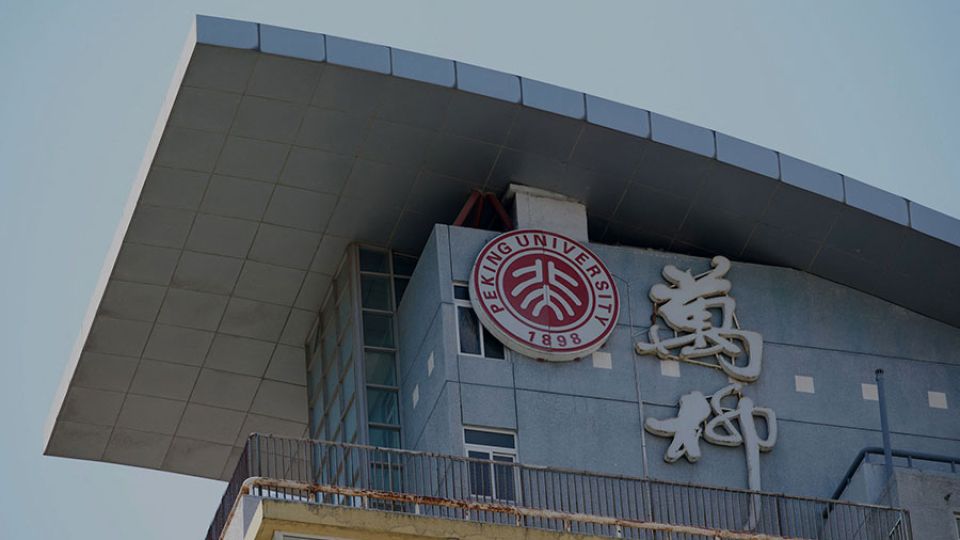
When American student Josh Lipman started weighing where to spend a semester abroad, he looked at Europe, Australia and parts of Asia, including Japan. China barely registered. “I think China just isn’t really on people’s radar,” said the 20-year-old public policy major at George Washington University. “I can’t even remember what programs we have there, to be honest.”
Lipman acknowledged that he would have reservations about surveillance and about adjusting to a political system unlike the one he knows. But he said those concerns would not necessarily rule China out. The details of a program would matter most. He said many students would feel more comfortable with a semester-long exchange run through their own university than with enrolling independently in a full degree at a Chinese university.
“I could see a study abroad experience as being both a positive and a negative,” he said. “Given how important US-China relations are to national security, having firsthand experience would maybe be a boost to people.”
His views reflect the questions raised by Chinese President Xi Jinping’s invitation for 100,000 young Americans to visit China for study and exchange over the next five years. He issued the invitation during a recent state visit to Washington, where he met US President Donald Trump for a closely watched summit. The number is double the 50,000 target Xi set in 2023. Chinese state news agency Xinhua says the earlier goal was reached in 2026, ahead of schedule.
The announcement has revived a debate among US-China analysts. The core question is whether it is both necessary and desirable to send the next generation of Americans to China to understand the country’s most consequential rival. Some analysts warn that the United States risks losing a generation of officials, scholars and business leaders who have the firsthand knowledge needed to understand China. The number of Americans studying there has fallen to a small fraction of its pre-pandemic level. Others, including Americans whose careers were shaped by years in China, question whether the benefits of going now outweigh the risks students could face in a more restrictive political environment with less academic freedom.
A widening gap in student flows
According to the Open Doors Report on International Educational Exchange, 265,919 Chinese students were enrolled at US institutions in 2024–2025. By contrast, only 1,749 American students received academic credit for studying in China in 2023–2024, the most recent year with data. That is down from more than 11,600 in 2017–2018 and 2018–2019. The two figures measure different types of student mobility and cannot be compared directly, but they clearly show how sharply the flow of American students to China has declined.
Sun Chenghao, a senior fellow at Tsinghua University’s Center for International Security and Strategy in Beijing, said the imbalance has political and structural causes. American universities have long drawn Chinese students who come for degrees, research opportunities and international careers. Americans who went to China, by contrast, traditionally did so for language training or short exchanges. The Covid-19 pandemic disrupted those programs. Geopolitical tensions, worries about research access and personal safety, funding cuts and restrictions imposed by universities have further discouraged Americans from going, he said.
A 2026 report from the US-China Education Trust points to another deterrent: a “widespread perception” that studying in China could hurt the chances of returning American students getting security clearances for government work.
Some government-backed programs that once built American expertise on China have also been suspended. The Fulbright program is one example. Its first American scholar, Derk Bodde, arrived in China in 1948 and left a firsthand account of the turbulent final years of the Chinese Civil War and the founding of the People’s Republic. Other US-funded efforts to build foreign-language and regional expertise, including the Boren Awards, the Critical Language Scholarship and the National Security Language Initiative for Youth, have also halted programs in mainland China.
Is firsthand experience worth the risk?
Ahead of the Trump-Xi summit, political scientist Rush Doshi and Rosie Levine, executive director of the US-China Education Trust, argued in a September 23 article for the Council on Foreign Relations that the United States needs a much deeper pool of China experts to keep up with a fast-changing relationship. Without people who can read Chinese primary sources, study in Chinese classrooms and track how policies are carried out on the ground, they wrote, the US is less secure and less capable of understanding and competing with China.
They urged Washington and Beijing to revive exchanges such as Fulbright. They also called for top-level assurances that participants would not face undue risk from Chinese security services.
Xi gave no such public assurances when he extended his invitation. Readouts from both governments following the meeting did not indicate that the two leaders had discussed protections for American students.
Isaac Stone Fish, founder and CEO of Strategy Risks, a firm that assesses companies’ exposure to China, said he values firsthand exposure. However, he argued that tighter control of information and tighter limits on what people can say and do have changed the calculation for students today. He lived in China from 2006 to 2011 and last visited in 2019.
“The single best thing that American universities can do is tell students the truth about the risks of studying in China,” he said. “They should make clear that the space for free speech is more constrained than it is in the US, so American students and their parents can make much more informed decisions.”
Beijing’s motives
Beijing clearly has its own reasons for wanting more young Americans to visit. Kevin Chen, an associate research fellow with the US Program at Singapore’s S. Rajaratnam School of International Studies, described engaging American youth as “low-hanging fruit” for China. Younger Americans tend to hold warmer views of China than older generations, and visits by American online personalities, such as streamer IShowSpeed in 2025, have drawn attention to the country.
“In doing so, Beijing likely hopes to nurture a generation of Americans who are more sympathetic to Chinese viewpoints,” Chen said.
Where exchange ends and influence begins
The line between cultural exchange and political influence has become a source of controversy in the United States. In 1985, a 31-year-old Xi visited Muscatine, a small city in Iowa, as part of an agricultural delegation. Beijing has repeatedly cited that trip as proof of the value of people-to-people ties.
Nearly 40 years later, in 2024, more than 20 students from Muscatine High School became the first group of American students to visit China following Xi’s initial invitation for 50,000 young Americans. The school said the Chinese government had fully funded the trip. Months later, at least one Iowa state lawmaker called for future trips to be canceled, arguing they could serve as political propaganda. Defenders of the exchange said it was educational and transparent.
Chen said that using American funding instead of trips paid for entirely by Beijing could ease political and security concerns. He added that recognizing Beijing’s soft-power goals does not cancel out an exchange’s value. Students can still learn about the everyday lives of ordinary Chinese people, even while dealing with limits on academic freedom and restrictions on what they can do.