Singapore Pushes for International Framework on AI Safety
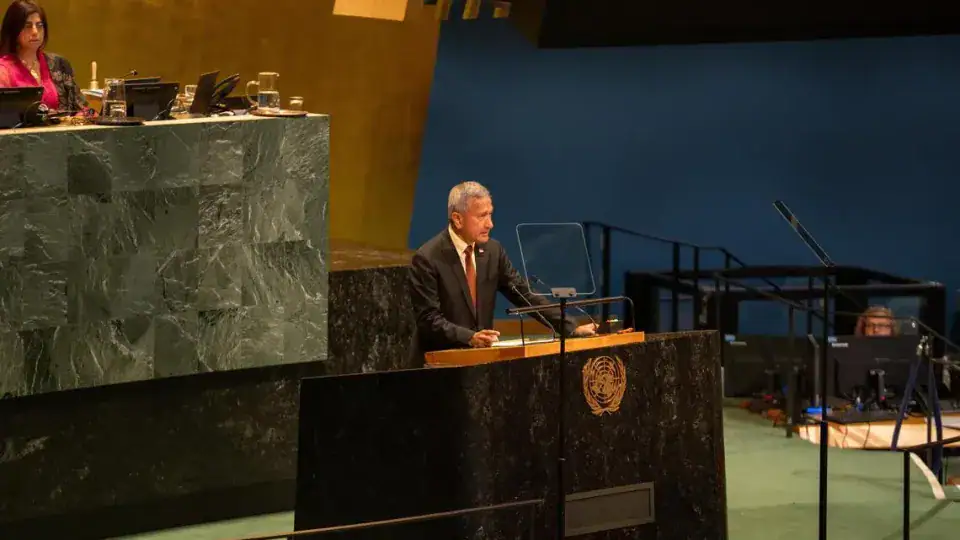
Singapore's Foreign Minister Vivian Balakrishnan has emphasized the need for a unified international framework to ensure the safe development and deployment of artificial intelligence (AI). Speaking at the United Nations General Assembly in New York, Balakrishnan stressed that the rapid advancement of AI capabilities poses significant risks, including the loss of control over autonomous systems, misuse by rogue actors, and widespread disruption of society.
He proposed the creation of a UN Framework Convention on AI Safeguards, similar to the one adopted for climate change. Such a framework would establish foundational principles, cooperative institutions, and provide a framework for international action. Balakrishnan also highlighted the need for international institutions to set common technical standards for AI, citing the examples of the International Telecommunications Union and the International Atomic Energy Agency.
The Singaporean minister emphasized that the risks associated with AI cannot be contained within national borders, and therefore, require a collective, international response. He emphasized that human beings must remain in charge of AI systems, and that any durable international approach must give all states a meaningful stake, not just those with advanced models or significant resources.
Balakrishnan's call for international cooperation on AI safety has gained traction, with over 20 countries and the European Union signing a declaration calling for binding international government oversight over frontier AI models. Singapore has also contributed to ongoing efforts to establish global standards for AI safety.
The push for international cooperation on AI safety comes amidst the intensifying competition between the US and China in the field of AI. China's pursuit of AI is driven by its desire to avoid missing the industrial revolution again, having been humiliated by unequal treaties in the 20th century. Balakrishnan emphasized that China's efforts are not just driven by competition with the US, but also by a desire to create a level playing field and access to technology.