
South Korea's President Lee navigates treacherous diplomacy over Strait of Hormuz deployment
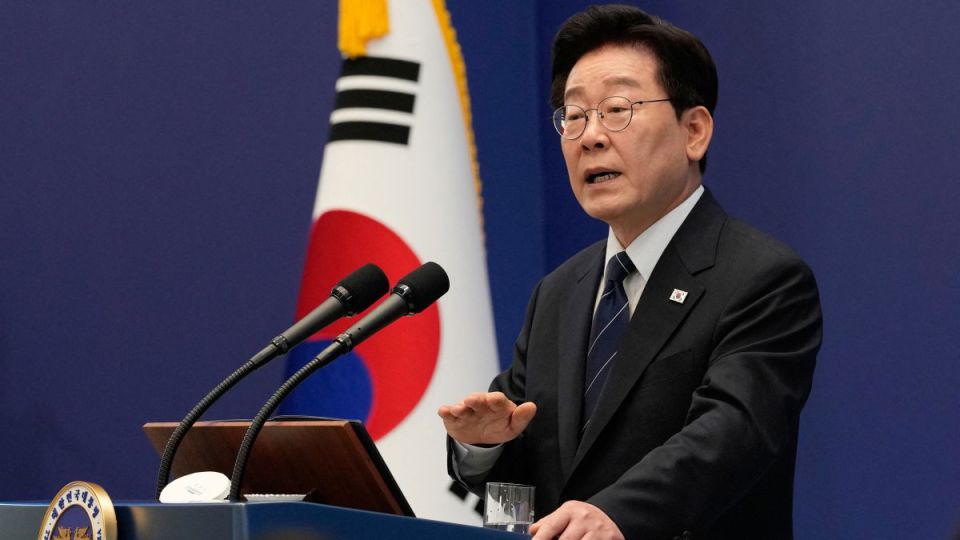
South Korean President Lee Jae Myung faces mounting pressure to contribute military resources to secure the Strait of Hormuz, yet he remains committed to a longstanding national principle of avoiding involvement in foreign conflicts. During a televised press conference on September 18, Lee affirmed that South Korea would not deploy troops or assets in ways that could entangle the country in US-Iran hostilities, a stance he emphasized would persist regardless of external pressures.
The dilemma reflects competing strategic interests. Seoul depends on the Strait of Hormuz for roughly 70 percent of its crude oil and over half its naphtha imports, making the waterway critical for industries ranging from semiconductors to automobiles. Yet the country faces a difficult balancing act between appeasing its security ally, the United States, and respecting domestic opposition and Iran's warnings.
The US has escalated its push for Seoul's involvement. President Trump singled out South Korea in August, publicly noting that he had asked whether it would join American efforts to denuclearize Iran and received a negative response. He simultaneously announced cuts to joint US-South Korean military exercises, framing them as costly and sending inappropriate signals to North Korea.
Lee's government has ruled out direct military engagement but indicated willingness to explore other forms of support. Officials have suggested potential contributions including logistical assistance, maritime patrol aircraft, mine-clearance capabilities, or expanding the role of the existing Cheonghae anti-piracy naval unit already stationed near the strait since May. A diplomatic team visited the United Arab Emirates to assess conditions on the ground, though officials clarified this was not a precursor to troop deployment.
Domestically, the issue carries significant political risk. According to a September 18 Gallup Korea poll, 55 percent of South Koreans oppose military deployment to the region. Lee's approval rating has already plummeted to 37 percent, reflecting public dissatisfaction with various government policies and decisions. Activist groups have organized street protests against any military involvement.
Iran has issued its own stern warnings. An Iranian foreign ministry spokesperson cautioned in Korean on social media that nations joining military operations in the Persian Gulf would face serious consequences and be viewed as supporting an aggressor.
International analysts suggest potential compromise solutions that could satisfy both Seoul's strategic partners and domestic concerns. Experts point to logistical and technical support as options that would allow South Korea to demonstrate alliance commitment while claiming to protect its own economic interests rather than participate in a US-led military campaign. A second possibility involves joining a Britain and France-led maritime initiative to protect commercial shipping once regional conflict subsides, an initiative Lee previously endorsed.
Underlying the pressure is a broader structural tension in the US-South Korean alliance regarding Middle East burden-sharing. Some observers argue that Washington has used the alliance itself as leverage, threatening to marginalize Seoul in Korean peninsula security matters if it fails to demonstrate commitment in Iran. Analysts note that any failure to provide support could disadvantage South Korea as the US potentially pivots toward direct negotiations with North Korea later in 2026.
For Lee, the Hormuz decision represents one of the most consequential foreign policy choices of his presidency, requiring him to thread a needle between alliance obligations, national economic interests, domestic political survival, and principles of non-involvement in foreign wars.