South Korea Scales Back Aegis Patrols in East Sea, Fueling Debate Over Missile Intelligence
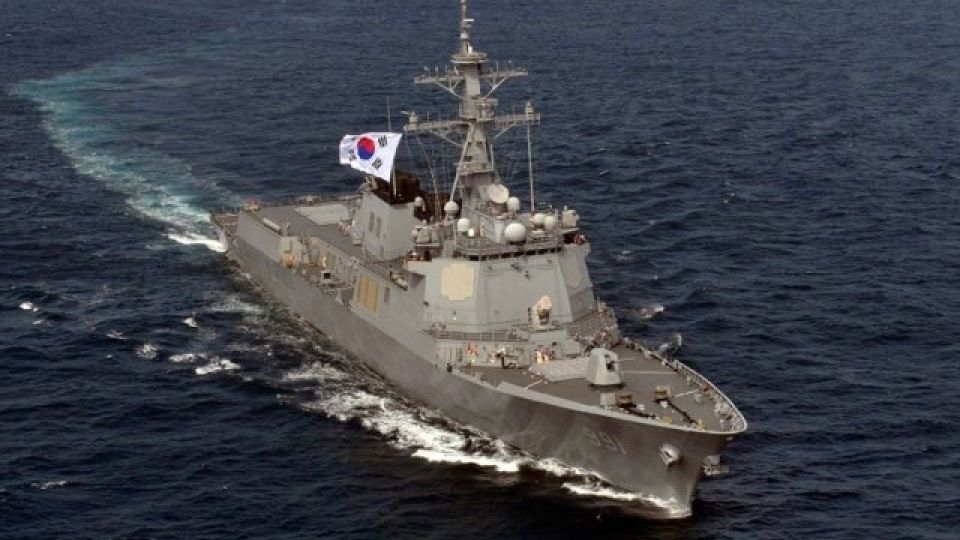
South Korea halted the continuous deployment of Aegis destroyers in the East Sea in September last year. The move has raised worries that the military may struggle to collect detailed flight data on North Korean missiles while Pyongyang keeps testing a wider range of weapons.
The military says its existing surveillance assets are enough to keep missile detection, tracking and defense readiness on track. Some officials, however, warn that fewer chances to gather detailed missile intelligence could be a problem. They argue that the capabilities needed for missile defense should be kept separate from those needed to judge how North Korean missiles actually perform.
According to several military sources, the Navy asked the Joint Chiefs of Staff (JCS) in September 2025 to suspend continuous Aegis destroyer deployments in the East Sea. The Navy cited personnel shortages and the strain of keeping warships at sea for long periods. The JCS approved the request. At that time, the JCS was led by Gen. Kim Myung-soo, a Navy officer who handed the post to Air Force Gen. Jin Yong-sung on September 30, 2025.
South Korea currently operates four Aegis destroyers equipped with advanced radar that can detect and track ballistic missiles over long distances, making them key assets for maritime surveillance. When the continuous deployment plan was proposed, the Navy had three Aegis destroyers.
After the suspension, the Navy was expected to send Aegis destroyers only when signs of an imminent North Korean missile launch appeared, rather than keeping them stationed in the East Sea.
“As I understand it, the original idea was to dispatch Aegis destroyers once we spotted signs of an upcoming North Korean missile launch,” one military official said on condition of anonymity. “The problem is that North Korea has been firing missiles more and more often without any clear warning beforehand.”
North Korea’s shifting missile lineup complicates monitoring
North Korea has recently run a series of tests on different missile systems, which makes collecting flight data more important for evaluating their performance and characteristics.
On October 29, Pyongyang fired multiple rounds from its 600mm super-large multiple-rocket launchers. On October 31, it said it had tested a tactical ballistic missile with a cluster warhead. On November 2, it followed up with tests of a cluster warhead on a long-range strategic cruise missile, along with an assessment of that missile’s vertical-strike flight profile.
On Wednesday, North Korea launched several projectiles toward the East Sea from the Sondok area of South Hamgyong Province.
In its initial statement, the JCS referred to the projectiles only as “missiles” and did not identify them as ballistic. It said South Korean and US authorities were examining their specifications and weighing possibilities including close-range ballistic missiles, surface-to-air missiles and cruise missiles.
The next day, North Korea’s state-run Korean Central News Agency reported that the country had test-fired a new surface-to-air missile and carried out a live-fire drill involving long-range strategic cruise missiles.
Another military official noted that radar data alone can make it hard to identify a projectile, since close-range ballistic missiles and surface-to-air missiles can overlap in range and flight behavior.
“Launch angles and flight altitudes change the trajectory, so it is difficult to tell the two apart using radar alone,” the official said.
The official cautioned, however, that it remains unclear whether continuously deployed Aegis destroyers would have allowed the military to identify Wednesday’s launches right away.
Military sees no surveillance gap, but intelligence concerns persist
The JCS maintains that ending continuous Aegis deployments has not created a gap in South Korea’s missile surveillance. According to the JCS, ground-based radars can detect missiles heading toward South Korean territory and track much of the flight of missiles fired toward the East Sea.
Any shortfalls in tracking can be covered by the real-time missile warning data-sharing mechanism among South Korea, the United States and Japan, as well as intelligence cooperation with Washington and Tokyo, the agency said.
Some officials still argue that being able to detect and track missiles that threaten South Korean territory is not the same as gathering detailed intelligence on North Korean missiles and assessing their capabilities.
A senior military official explained that ground-based radars offer stable operations and precise tracking, while maritime radars have the advantage of mobility, since ships can reposition to improve coverage.
“Ground radars sit in fixed locations, so the Earth’s curvature and other factors can limit their ability to follow a missile later in its flight, as it moves farther away,” the official said.
“Maritime assets, on the other hand, can change position, which could let them collect additional flight data.”
The same official said these differences do not necessarily mean weaker missile defense, because South Korea can still obtain the information it needs to respond to missiles aimed at its territory without tracking their entire flight over the East Sea.
Personnel who analyze missile data directly, however, have voiced concern about what the suspension means for building detailed intelligence on North Korean weapons. An official in a land-based unit that analyzes Aegis radar data said the suspension has made it harder to consistently obtain the maritime surveillance data needed to assess the characteristics of North Korean missiles.
“It is true that without Aegis destroyers continuously deployed in the East Sea, there are certain limits on how deeply we can analyze the details of North Korean missiles,” the official said.
“We need to keep building our data on their ranges, flight paths and other characteristics so we are ready for future threats.”
Intelligence gains come with operational costs
The debate ultimately comes down to how the military should balance the intelligence benefits of continuous Aegis deployments against the funding and personnel needed to sustain them.
Although Aegis destroyers offer advanced maritime surveillance, keeping them at sea for long stretches carries heavy operating costs and places considerable demands on their crews.
The senior official who explained the differences between ground-based and maritime radars also stressed the need to weigh the operational burden of prolonged deployments.
“Continuous Aegis deployment would give us more intelligence on North Korean missiles, but it also brings substantial costs and personnel demands,” the official said. “In the end, we have to weigh the value of extra intelligence against the resources required to collect it.”