Thai PM's UN Speech on Border Dispute Criticized as Political Spin by Analysts
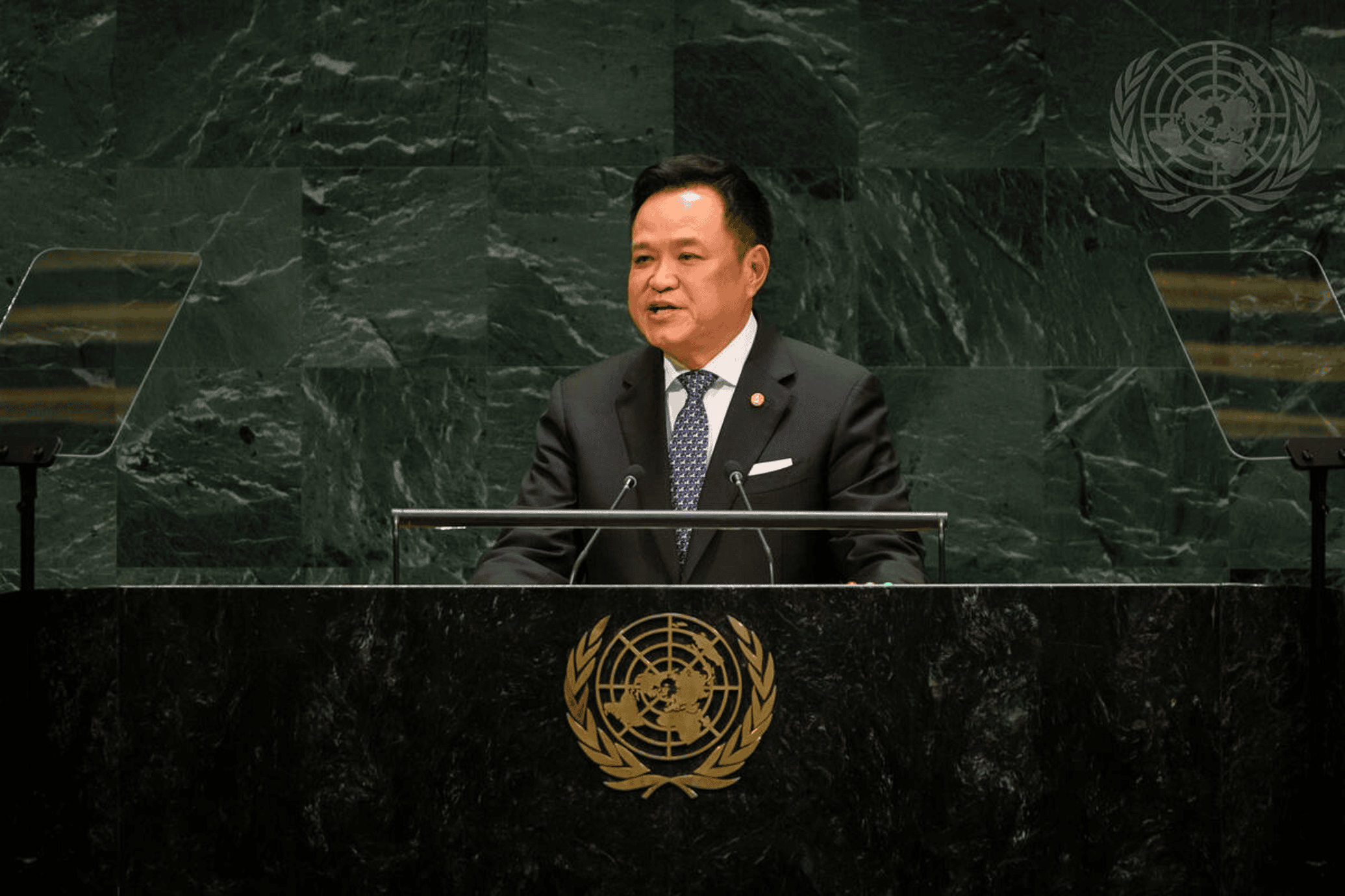
Thai Prime Minister Anutin Charnvirakul's recent address to the United Nations General Assembly has drawn criticism from analysts who characterize his comments on the Cambodia border dispute as an exercise in diplomatic maneuvering rather than a genuine reflection of the situation on the ground.
During his September 24 speech in New York, Anutin referenced discussions with Cambodian Prime Minister Hun Manet from May, stating that both nations had agreed to handle border disputes through bilateral channels. He then accused Cambodia of bypassing this agreement by launching compulsory conciliation proceedings under UNCLOS.
"Thailand has participated in good faith, but let me be clear: this mechanism applies solely to maritime boundaries," Anutin stated. "Meanwhile, Cambodia must collaborate with us on border security matters, including tangible cooperation to address online fraud networks and landmine removal."
He continued by emphasizing that shared security required joint action, declaring that Thailand has never pursued conflict but that genuine peace demands Cambodia's sincere commitment.
However, Anutin's statements appear inconsistent with Cambodia's documented efforts. Since the second ceasefire was signed on December 27, 2025, Cambodia has persistently sought negotiations on land border matters. Prime Minister Hun Manet has made diplomacy a central priority, expressing his determination to pursue peace even with minimal chances of success. Cambodia has repeatedly requested that Thailand commit its Joint Boundary Commission team to collaborative work, without results.
Geopolitical analyst Nhel Rattha characterized Anutin's UN remarks as "a diplomatic maneuver and the construction of a political story designed to shape perceptions and secure political advantages both at home and abroad."
According to Rattha, the speech created an impression of strength and control, suggesting Thailand could dictate terms. This constitutes a form of psychological messaging meant to convince audiences that Thailand holds leverage at the negotiating table.
Rattha also noted the tactic shifts responsibility onto Cambodia, creating the perception that Phnom Penh is either unprepared or causing delays while Bangkok appears perpetually ready to engage.
The remarks serve domestic political objectives as well, Rattha explained. "Addressing Thai citizens abroad sends a message aimed at boosting political support within Thailand, appealing to nationalist sentiments and military circles, and demonstrating that the government maintains a firm stance on border and maritime resource questions with Cambodia."
Kin Phea, director of the Institute of International Relations at the Royal Academy of Cambodia, similarly dismissed Anutin's statements as empty rhetoric designed to project an image of Thai goodwill to the international community.
In practice, Phea pointed out, Thai military forces continue to occupy Cambodian territory in violation of international law, destroying and seizing homes, agricultural land, and other property belonging to Cambodian citizens, all in breach of ceasefire terms.
"If Thailand genuinely wanted to resolve border issues peacefully, it would dispatch its JBC working team immediately so technical experts could begin their work, instead of maintaining an illegal military occupation of Cambodian land," Phea stated.
"Thailand lacks goodwill. Their statements are simply designed to create a favorable impression so the international community views Thailand as a civilized nation that respects international law. But the reality is that Thailand behaves as an aggressive, predatory state," he concluded.