Thailand-Cambodia Border Conflict: Fact and Fiction at the UN
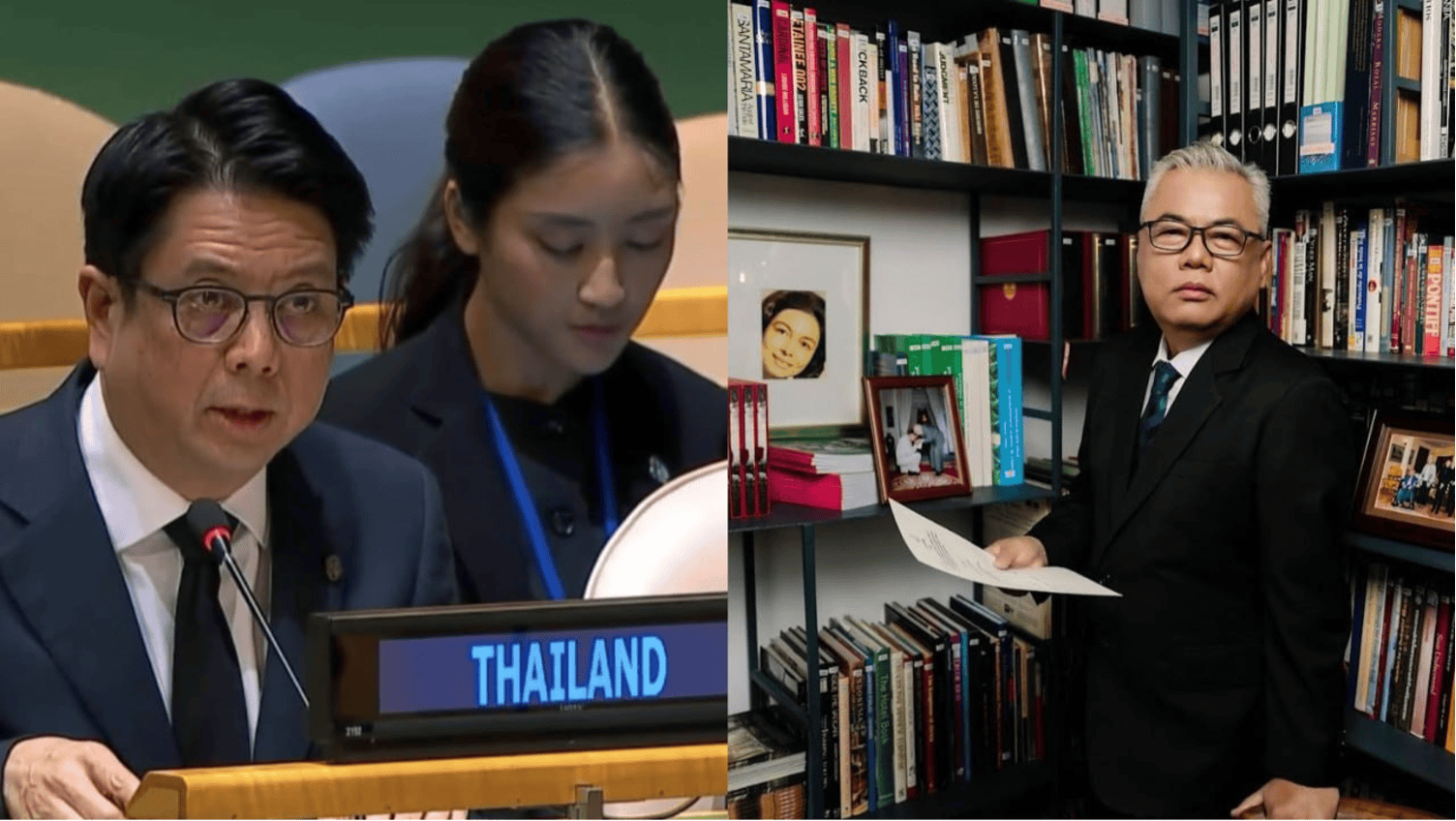
The Thai government’s presentation of its border conflict with Cambodia before the UN General Assembly raises serious questions, particularly because it appears to rely on claims that conflict with both the historical record and conditions on the ground.
The international community can assess what is needed for a peaceful resolution by examining the available evidence and the long history of disputes between the two countries.
Thailand’s account did contain several points that appear to be true. Thai politicians were angered by Cambodia’s publication of a recording of a private conversation involving Thai and Cambodian leaders. Several Thai soldiers were reportedly injured by unexploded ordnance near the border. And civilians on both sides—numbering in the hundreds of thousands—have suffered, and continue to suffer, as a result of the conflict.
Beyond those points, however, the Thai government’s account provides little basis for its military actions against Cambodia. Instead, it presents Thailand as an innocent victim of a supposedly provocative Cambodian government and population, despite the lack of clear evidence supporting several of its central allegations.
Thailand has claimed that the ordnance that injured its soldiers consisted of mines recently and secretly planted by Cambodia on Thai territory. That explanation overlooks the fact that the border region was heavily mined and contains substantial unexploded ordnance left over from decades of war. Thailand has also denied initiating military action and portrayed displaced Cambodian civilians as people who had occupied Thai territory since the 1980s despite repeated Thai objections.
These arguments depend on an international audience that is distant from events along the border and prepared to accept Thailand’s account without examining whether it has reasons to misrepresent the situation. The historical record offers grounds for caution.
A long history of territorial disputes
Thailand has repeatedly sought control over significant areas of Cambodian territory. During the 19th century, it occupied large parts of Cambodia before French and Cambodian authorities forced it to withdraw. Thailand seized some of the same territories again when World War II began, but later lost them after intervention by the United States.
Over the past several decades, Thailand has also carried out periodic military actions along the border that have pressured or intimidated Cambodia over its administration of disputed areas. In cases involving international legal rulings, including those concerning the Preah Vihear temple, Thailand has at times resisted or disregarded the implications of international law.
The latest effort to claim that the disputed areas have always belonged to Thailand therefore follows a familiar pattern. So does the use of narratives that present Thailand as acting defensively while minimizing its own role in the dispute.
Thailand’s statements at the UN General Assembly repeat long-standing arguments connected to its desire to control Cambodian territory. A peaceful settlement will require the international community to remember this history and view recent developments in that broader context.