Thailand's Border Dispute With Cambodia: Separating Reality From Spin at the United Nations
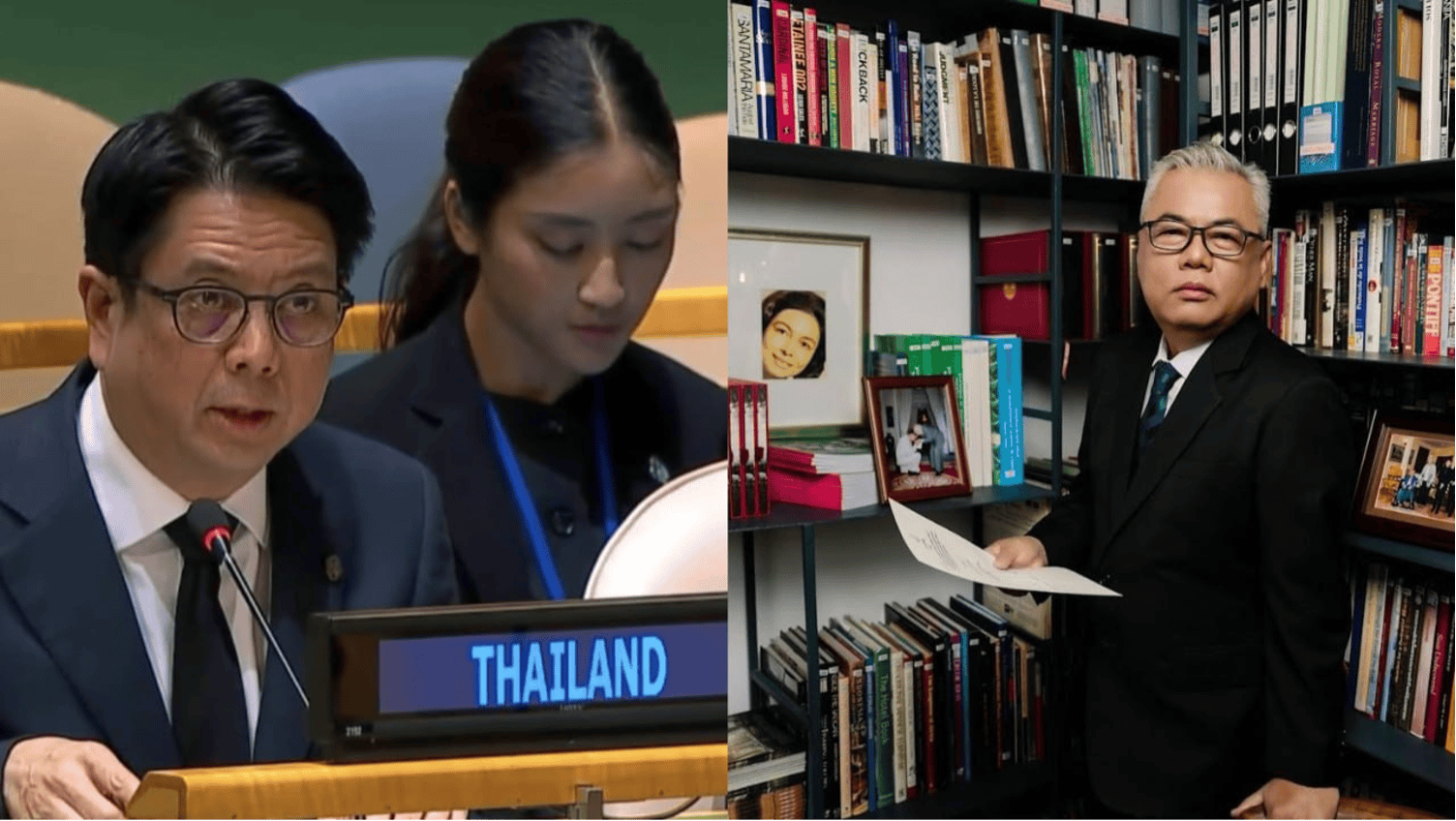
It is puzzling how readily the Thai government has put forward misleading and outright inaccurate claims about its territorial dispute with Cambodia on the world stage at the UN General Assembly.
The facts on the ground and the historical record offer the international community a far more reliable basis for understanding what a peaceful resolution to this conflict requires.
What Thailand Got Right — and Where the Truth Ends
A few elements of Thailand's presentation to the General Assembly do hold up. Thai officials were genuinely angered when Cambodia made public a recorded private exchange between leaders of the two countries. Reports also confirm that several Thai soldiers sustained injuries from unexploded ordnance near the border. And no one disputes that hundreds of thousands of civilians on both sides have suffered as a result of the ongoing hostilities.
Beyond those points, however, Thailand's account of events diverges sharply from reality — and none of these acknowledged facts come close to justifying the military actions Thailand has taken against its neighbor. The Thai government has constructed an elaborate narrative in which it is the blameless victim of Cambodian provocation, but that story does not withstand scrutiny.
Questionable Claims and Missing Context
Thailand has alleged, without providing compelling evidence, that the ordnance injuring its troops was deliberately planted by Cambodians on Thai soil. This ignores the well-documented reality that the border region is riddled with mines and unexploded munitions left over from decades of armed conflict.
Thai officials have also insisted their military was not the aggressor and that displaced Cambodian civilians were in fact illegal occupants of Thai territory dating back to the 1980s, despite Thai objections at the time. These assertions rest on the assumption that the international community is unfamiliar with conditions along the border and will take Thailand's word at face value.
A Pattern of Territorial Ambition
History tells a different story. Thailand has repeatedly attempted to annex or dominate Cambodian land:
- During the 19th century, Thailand occupied large portions of Cambodian territory until French and Cambodian forces reversed those gains.
- At the outbreak of World War II, Thailand again seized Cambodian lands, only to be forced out with American involvement.
- In more recent decades, Thailand has carried out intermittent military operations along the border designed to harass or intimidate Cambodia.
- When the International Court of Justice ruled on specific border areas, notably the Preah Vihear temple, Thailand opted to disregard the decision.
The current push to claim these territories under the guise of historical ownership is neither a new position nor a new tactic. It represents a repackaging of longstanding ambitions.
Old Playbook, New Audience
Thailand's remarks at the General Assembly amount to a recycling of familiar arguments in pursuit of a goal it has harbored for generations: control over Cambodian borderlands. The international community would do well to weigh this history carefully and recognize the latest developments as part of a recurring pattern rather than an isolated grievance.