The Social Media App Pushing Japan to Rethink Digital Privacy
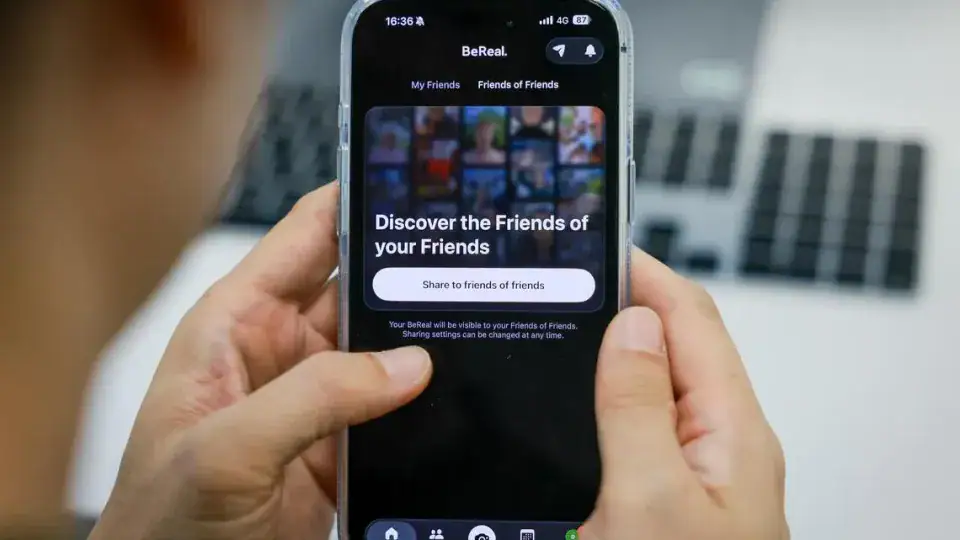
Every day, without warning, millions of Japanese smartphone users receive the same prompt: ‘Post now.’ That’s the daily summons from BeReal, a photo-sharing app that has carved out an especially strong following among Japan’s youth.
Launched in France in 2020 and trending globally in 2022, BeReal arrived in Japan around 2023 — not as another polished feed, but as a rebellion against perfection. Users get one chance per day to capture a dual-camera snapshot: face and surroundings, unedited and real. Miss the two-minute window, and your post is flagged as late, while you’re locked out of friends’ content until you respond. No filters, no retakes, no scrolling through your gallery.
The result? Over 6.5 million monthly active users in Japan as of June 2026, with 92 percent between the ages of 13 and 27 — a jump from five million a year earlier. Its cultural footprint is clear: brands like Uniqlo, Shiseido, and Netflix have tapped into its reach, and even major films like Spider-Man: Brand New Day found a niche audience on the platform.
For many young Japanese, the appeal lies in authenticity. In a society where appearances often matter more than reality, BeReal offers a rare space to show imperfection — a fleeting, behind-the-scenes glimpse shared mainly with close circles. It’s not the only platform they use — TikTok, Instagram, X, LINE, and the newer Korean import Setlog all compete for attention — but none have the same time-sensitive urgency.
That urgency, however, has become a serious security concern. Between April and May 2026 alone, at least 40 workplace data leaks were directly linked to the app, according to an NHK investigation. Employees, caught up in the reflexive habit of posting, snapped photos inside offices without realizing what was visible in the background.
One of the most high-profile incidents involved Nishi-Nippon City Bank, where a staff member posted from a branch, accidentally revealing client names, addresses, internal sales targets, and corporate account details. The image later surfaced on X, amassing over 10 million views overnight. The fallout triggered public apologies, stock losses, and an official review by Japan’s Financial Services Agency.
Similar breaches followed: a teacher broadcasting a city school management screen, a pizza shop worker leaking customer data, a university employee exposing job applications, and a hospital revealing patient identities. While there’s no indication anyone acted maliciously, the lessons are stark — digital privacy isn’t optional, and even ‘friends only’ doesn’t mean ‘no consequences’.
Some companies, like Nishi-Nippon City Bank, are finally enforcing long-ignored smartphone policies. Others are introducing mandatory lockers, stricter social media bans during work hours, and fresh training on digital hygiene. Security experts and sociologists alike stress that the problem isn’t the app, but the assumption that anything shared online can stay private — a lesson being painfully relearned across industries.
Japan’s generational shift isn’t just about new tools — it’s about new responsibilities. As younger workers adapt, institutions are being reminded: outdated habits don’t scale in a world where every photo tells a story, and every background holds a vulnerability.