True Peace Demands Adherence to International Law: A Cambodian Perspective on Thailand's UN Address
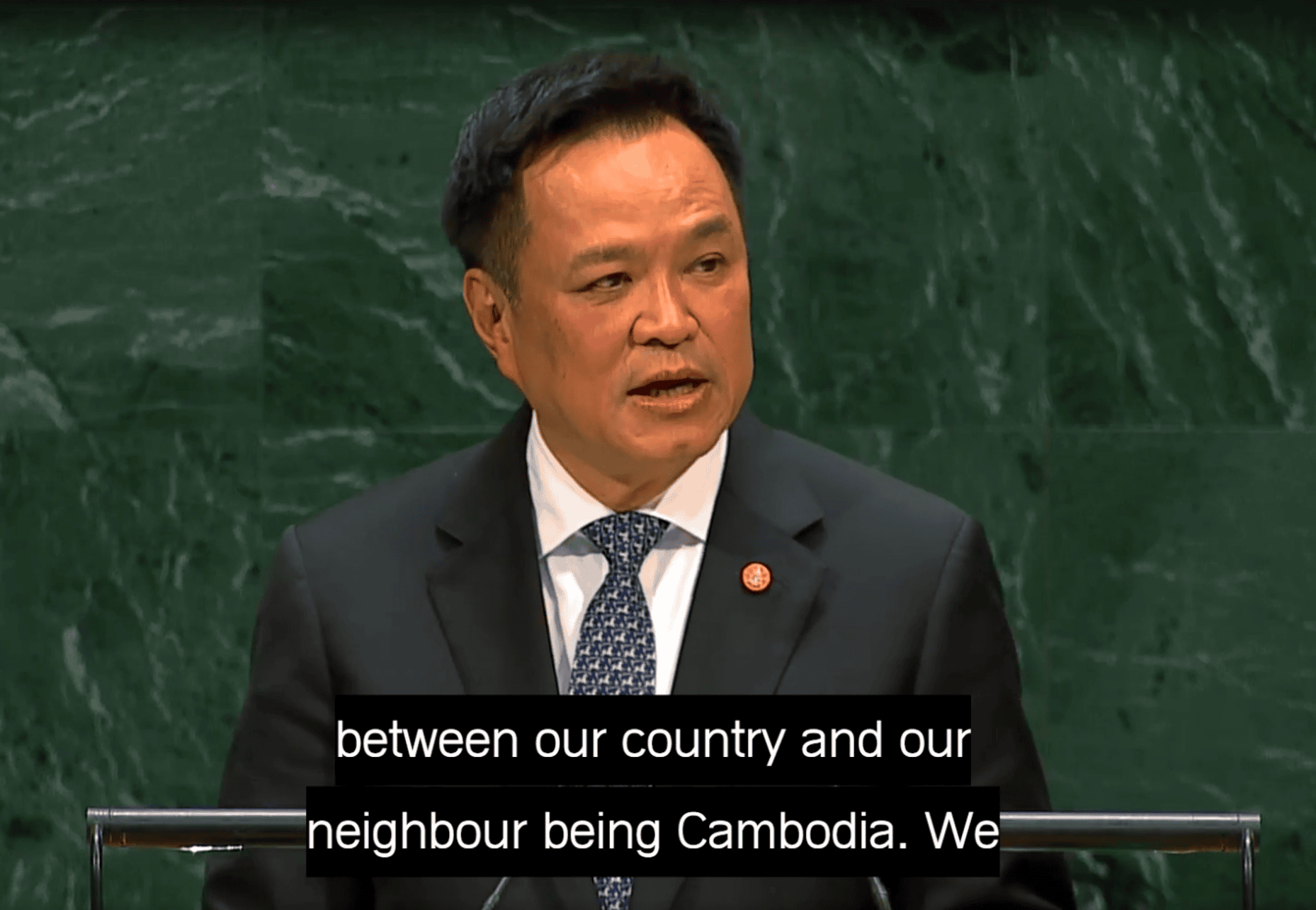
When Thailand's Prime Minister Anutin Charnvirakul addressed the 81st United Nations General Assembly in late September, he emphasized his nation's commitment to peace and urged Cambodia to pursue genuine reconciliation efforts.
Speaking as a Cambodian, I appreciate any sincere appeal for peaceful relations. Cambodia has no desire for armed conflict. Yet enduring peace cannot rest on rhetoric alone—it must be founded on mutual respect for sovereignty, adherence to international legal frameworks, honored treaties, verifiable facts, and the principle that all nations deserve equal treatment.
For Thailand's peace initiative to have substance, both nations must resolve their differences through honest conversation, impartial fact-finding, and established legal channels rather than military posturing or dueling public relations campaigns.
Cybercrime and Border Disputes Are Distinct Matters
Thailand has every right to highlight the growing threat of online fraud and cross-border criminal enterprises on the world stage. Cambodia should join forces with its neighbor to dismantle criminal operations, safeguard victims, and enhance regional law enforcement collaboration.
That said, cybercrime and territorial disputes belong to entirely separate categories. Digital fraud involves criminal networks that operate across borders, while territorial disagreements center on boundary lines, national sovereignty, historical treaties, cartographic records, and established international legal principles.
These two challenges must be addressed on their own merits, without allowing one to obscure the other.
I make no unfounded claim that Thailand is deliberately trying to shift global attention away from border issues. Intentions should be determined by evidence rather than speculation. However, the international community bears a duty to assess both matters with equal rigor and independence.
If Thailand expects global institutions to take its concerns about cybercrime seriously, Cambodia deserves the same consideration when raising questions about territorial integrity and sovereign rights.
This is not an expression of antagonism toward Thailand—it is a call for balanced application of international norms.
Evidence and Independent Review Are Essential to Peace
Many nations observing this situation are far removed from Southeast Asia and may lack firsthand knowledge of conditions along the Cambodia-Thailand border. Their understanding often depends on official statements, news coverage, archival documents, maps, and information supplied by the parties themselves.
For this reason, international bodies should carefully examine relevant treaties, historical accords, binding legal rulings, independently confirmed data, and the lived experiences of border communities.
No government should assume its version of events will be accepted at face value. Cambodia must also be willing to subject its positions and actions to independent scrutiny.
Genuine international justice requires thorough consideration of all available evidence, regardless of which country brings it forward.
Building Peace Is a Joint Responsibility
Prime Minister Anutin's call for peace opens the door for both countries to reinforce mechanisms that support stability.
This should involve:
- Honoring international law and existing bilateral agreements
- Engaging in substantive dialogue while exercising restraint
- Submitting contested claims to independent verification
- Ensuring the safety and wellbeing of civilians in border areas
- Utilizing appropriate bilateral and multilateral dispute resolution channels
Peace should not be determined by military capability, economic leverage, or diplomatic clout. It should rest on a framework of rules that both parties uphold.
If Thailand truly has never pursued conflict, as its leader asserted, then that principle should be reflected in concrete measures that ease tensions and advance peaceful outcomes.
The People of Both Nations Deserve Better
Cambodians have no appetite for another war, and neither do the people of Thailand. Communities on both sides of the border deserve safety, respect, economic prospects, and freedom from anxiety.
While governments may clash over historical interpretations, territorial claims, and legal readings, ordinary Cambodians and Thais should not become adversaries because their leaders have unresolved disputes.
Cambodia and Thailand can work together to combat cybercrime while simultaneously addressing territorial questions through proper legal and diplomatic avenues. These obligations are not in conflict.
The United Nations should hear both nations, weigh the evidence without bias, and ensure that international law applies equally to states of all sizes and influence.
A Closing Message
As a citizen of Cambodia, I am not advocating for confrontation with Thailand. I am advocating for truth, evidence, meaningful dialogue, accountability, and respect for the international legal order.
I hold the Thai people in high regard, just as I expect Thailand to respect Cambodians. Sustainable peace cannot be achieved by sidestepping difficult issues or allowing one concern to eclipse another.
If Thailand genuinely pursues peace, Cambodia should embrace that message. But peace must be proven through consistent action, not statements alone.
Let both countries strengthen their peaceful institutions. Let disputed facts undergo independent examination. Let sovereignty be honored, and let international law be applied without favoritism.
Peace does not mean remaining silent. Peace means pursuing justice. And justice begins with equal respect for the rule of law.