True Peace Demands Adherence to International Law, Not Just Diplomatic Rhetoric
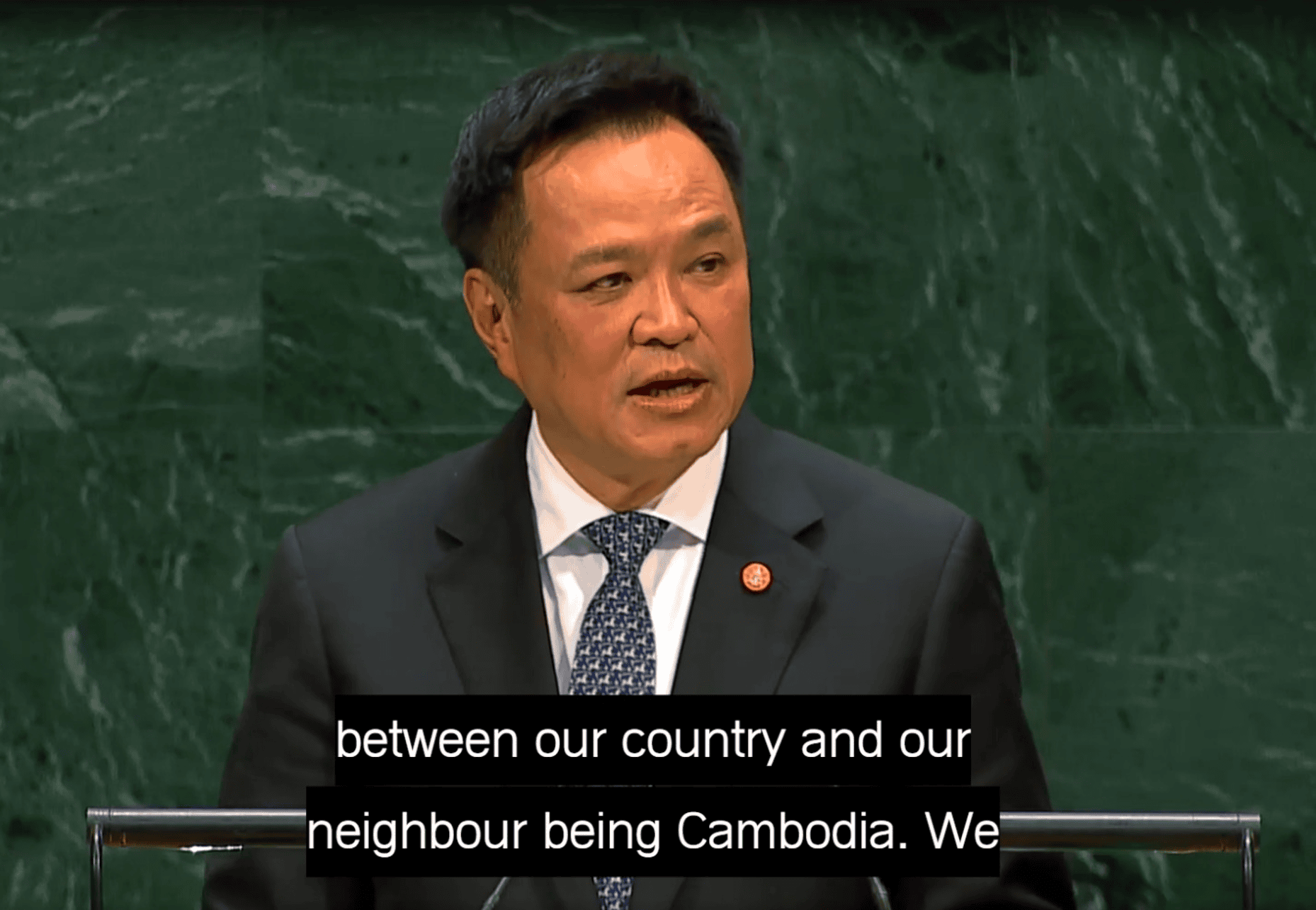
During his address to the 81st United Nations General Assembly, Thai Prime Minister Anutin Charnvirakul asserted that Thailand has never pursued conflict, urging Cambodia to demonstrate a sincere commitment toward building regional peace. While genuine calls for harmony should always be welcomed by citizens who have no desire for war, meaningful reconciliation demands far more than polished diplomatic speeches. It requires an unwavering commitment to sovereignty, international legal frameworks, bilateral accords, and mutual respect between nations.
If both countries genuinely desire peaceful coexistence, longstanding disagreements must be resolved through transparent dialogue, impartial oversight, and established legal mechanisms, rather than through political leverage, military posture, or competing public narratives.
Separating Transnational Crime from Territorial Sovereignty
Thailand is entirely justified in drawing global attention to urgent challenges such as cross-border cyber fraud and transnational crime syndicates. Cambodia, too, has an obligation to cooperate internationally to dismantle illicit networks, protect victims, and bolster border enforcement. However, criminal enterprise and territorial sovereignty are fundamentally distinct matters.
While cyber scams represent a serious law enforcement challenge, border disputes involve historical treaties, cartographic records, sovereignty, and international jurisprudence. One crisis must not be used to obscure or sideline legitimate territorial matters. The international community has a duty to evaluate both issues fairly and independently, ensuring that Cambodia is granted an equal platform to voice its sovereignty concerns alongside Thailand’s focus on transnational crime.
The Necessity of Evidence and Independent Verification
For observers unfamiliar with the geographic and historical complexities along the frontier, assessments often depend on conflicting governmental claims. To establish clarity, multilateral institutions must examine verified treaties, established legal rulings, and ground-level realities.
Neither administration should expect its narrative to bypass scrutiny. Cambodia, like Thailand, must remain willing to have its claims evaluated by independent bodies. Lasting international justice requires all relevant evidence to be considered impartially, regardless of which government presents it.
A Joint Framework for Enduring Peace
The Thai Prime Minister's statements present an opportunity to revitalize peaceful conflict-resolution frameworks. Constructive progress should center on several core principles:
- Strict adherence to international law and standing bilateral agreements.
- Engagement in sustained dialogue coupled with military and political restraint.
- Independent verification of contested facts and border delimitations.
- Comprehensive protection for civilian populations living in border areas.
- Active use of recognized bilateral and international dispute-settlement mechanisms.
Lasting peace cannot rely on asymmetries in military strength, economic influence, or diplomatic reach. It must depend on a shared set of rules that both sides respect without exception.
Protecting the Welfare of Border Populations
Neither the Cambodian nor the Thai public stands to benefit from renewed confrontation. Communities residing along the border deserve physical safety, economic opportunity, and stability. Differences between administrations regarding historical agreements and territorial delineations should not turn ordinary citizens into adversaries.
Joint operations against transnational crime can easily proceed in tandem with peaceful diplomacy regarding border questions; these goals are not mutually exclusive. If both governments genuinely seek reconciliation, that intent must be proven through concrete measures that de-escalate tensions and respect international standards of justice.