UNICEF Calls for Child-Focused Investment as Poverty and Climate Risks Test Siem Reap Families
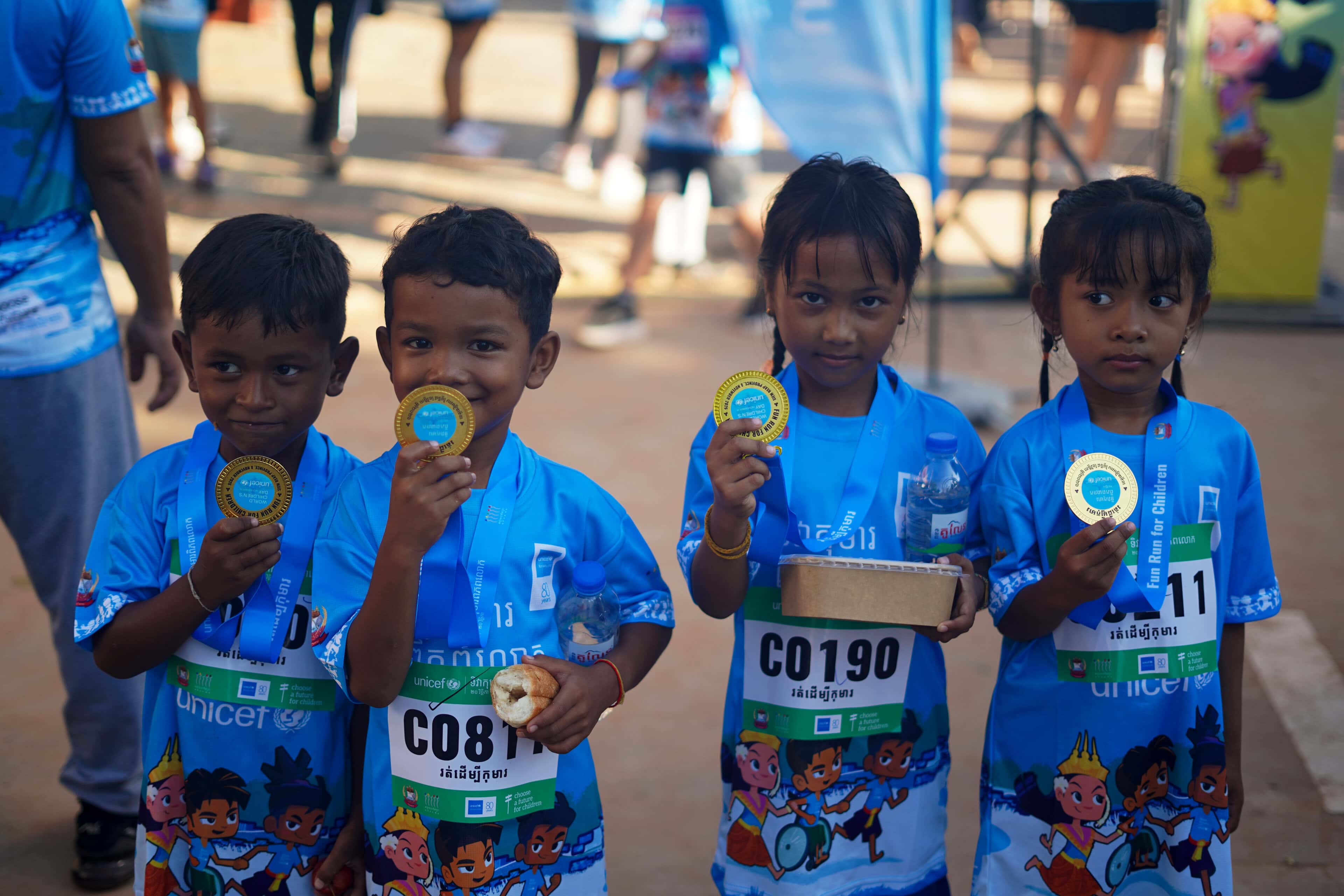
UNICEF is urging authorities in Siem Reap to place children at the heart of public decisions and spending. The agency says poverty, exposure to climate hazards and limited access to basic services remain serious concerns in the province, even as more than 5,000 people came together on November 9 to mark World Children's Day.
Almost one in three households in Siem Reap, amounting to more than 350,000 people, live in poverty or vulnerable conditions, according to a UNICEF statement. This restricts their access to quality education, healthcare and social protection.
Climate threats add to the strain. More than 28,000 children are highly exposed to risks such as flooding and extreme heat, which can interrupt their use of essential services. Water and sanitation access is also uneven, particularly in rural areas, compounding the difficulties faced by children and their families.
More than 16,000 people with disabilities in the province, including about 1,000 children, face major obstacles in reaching services and opportunities, the agency added. UNICEF noted that these challenges persist in a province known around the world for its cultural heritage.
At the opening ceremony, UNICEF Cambodia representative Maha Damaj called on decision-makers to prioritise children in every community, especially those facing hardship or recovering from crisis. She said children in a city, in a floating community on the Tonle Sap or in a village rebuilding after a disaster all need to be central to decisions and investment. She added that the day offered a chance to celebrate children's achievements, hear their hopes and renew the commitment to protect their rights in every circumstance.
The celebration was organised by UNICEF together with the Siem Reap Provincial Administration and the APSARA Authority, and took place at Hun Sen Rolous Secondary School and around the Bakong Temple area. The event carried the theme "Choose a Future for Every Child" and aimed to promote children's rights and youth participation.
A youth-led interactive learning space, the UNICEF Village, gave visitors a way to explore children's rights, climate action, online safety, inclusion and mental health. Other activities focused on healthy lifestyles and civic participation. The programme also included 3-kilometre and 10-kilometre fun runs around Bakong Temple, an official ceremony and a free performance by Phare Circus.
Hun Sen Rolous Secondary School was highlighted as an example of linking education with youth leadership, climate awareness and community engagement. Supported by UNICEF and the Ministry of Education, Youth and Sport, the school runs the Local Life Skills Education programme and the Youth Solar initiative. According to UNICEF, these efforts raise awareness of climate change, build skills in science, technology, engineering and mathematics, and encourage young people to get involved in their communities.
Damaj also stressed that protecting children's rights means recognising the ideas and solutions they can contribute to the problems facing their communities. Reflecting on the day, she said every child matters, every child has rights and every child deserves the chance to fulfil their potential. She added that she remains optimistic whenever she meets young people across Cambodia, who have the ambition and ideas needed to tackle today's biggest challenges.
World Children's Day is UNICEF's Global Day of Action, led by children and focused on their wellbeing. It marks the anniversary of the adoption of the UN Convention on the Rights of the Child, which Cambodia ratified in 1992. UNICEF said the occasion was a time to acknowledge progress and renew its pledge to protect the rights of every child.