US Overtakes India as Nepal's Top Tourist Source Market for the First Time
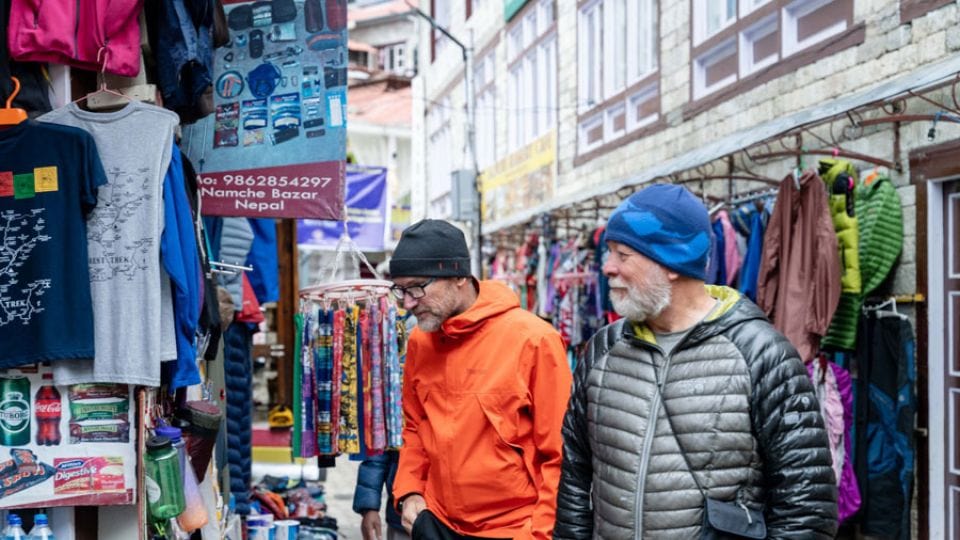
American visitors have overtaken Indian travelers to become the largest group of foreign tourists in Nepal for the first time. The shift happened in October, when a steep drop in Indian arrivals after the August floods reshaped the country's tourism market.
Nepal welcomed 17,437 American tourists in October, up 31.24 percent from the same month last year, according to the Nepal Tourism Board, the government agency that promotes tourism. That figure more than doubled the 8,299 Americans who arrived in September.
India, which had long been Nepal's biggest source market, slipped to second place. It sent 12,097 visitors in October, down 30 percent year on year and well below the 17,425 recorded in September. China came third with 11,695 arrivals, a 73 percent rise from October last year. In September, Nepal had received 11,212 Chinese tourists.
The change came despite the devastating August 26 floods along the Bhotekoshi and Trishuli river systems. The disaster drew negative coverage abroad and set off a wave of cancellations across Nepal's hospitality sector.
Overall, Nepal received 132,814 foreign visitors in October, a 3.4 percent increase over the previous year. The figure marked a recovery from September, when the immediate fallout of the disaster disrupted travel plans and led to cancellations. Nepal had recorded 88,248 foreign arrivals in August.
Mani Raj Lamichhane, a director at the Nepal Tourism Board, called the result a historic first and good news for the industry. He said the rise of American arrivals to the top spot was mainly the result of fewer Indian tourists.
Human toll and missing foreigners
The floods and landslides have also caused heavy loss of life. According to the National Disaster Risk Reduction and Management Authority, 636 foreign nationals have been reported missing. Most of them are non-resident Indians who were traveling through Nepal to Tibet for the Kailash Mansarovar pilgrimage. The disaster has so far killed 1,451 people, and 5,745 remain missing.
American travelers stay the course
Despite the scale of the destruction and the distressing images circulating online, American visitors appear to have largely kept their plans.
Ganga Bahadur Thapa, managing director of Nepal Hiking Team, which mainly serves American clients, said his company received no cancellations after the disaster. A few clients postponed their trips, but most went ahead. His firm handles more than 1,200 American travelers a year.
Thapa said American travelers tend to check actual conditions on the ground rather than react only to headlines and travel advisories. Although the disaster hit the popular Langtang trekking region, he noted, other areas were safe, and his clients understood that.
When Langtang treks were affected, his company offered clients alternative routes, including the Annapurna Circuit and Everest Base Camp, without raising prices. That reassured them, he said, which is why none of them cancelled.
Tour operators also say Nepal is drawing younger American travelers who are interested in adventure activities such as trekking and mountaineering.
Pawan Tuladhar, founder of Dharma Adventures, another operator with many American clients, said the US has long been a dependable market for Nepal, even with little promotion aimed at American travelers. He described them as a high-end segment whose numbers have grown steadily in recent years.
He added that the expansion of American hotel chains in Nepal has helped build confidence by offering familiar lodging and international service standards. Operators also point to the Nepali diaspora in the United States. Nepalis holding American passports are increasingly visiting home, especially during major festivals such as Dashain and Tihar.
Indian pilgrimage routes hit hard
Industry figures say the bigger reason for America's rise is the sharp fall in Indian travel after the floods. Bimal Naharki, president of the Association of Kailash Tour Operators Nepal, said more than 5,000 Indian pilgrims cancelled Kailash Mansarovar trips planned for September. Collapsed roads and disrupted transport also dampened travel plans for October.
The pilgrimage is a major source of income for Nepali tour operators. It supports airlines, hotels, restaurants and guesthouses in gateway towns such as Nepalgunj and in mountain hubs like Simkot in Humla, and it provides work for local guides, porters and drivers. Each season, operators handle tens of thousands of Indian and non-resident Indian pilgrims, with quotas and arrangements often covering 24,000 to 25,000 visitors.
The Nepal route, which runs through overland crossings such as Kerung or by flights and helicopter transfers via Simkot and Hilsa, is seen as one of the more accessible and affordable ways to reach Tibet. Disruption to these routes therefore affects far more than pilgrimage companies. It is hurting businesses across the wider tourism supply chain.
Operators say Indian travelers are especially sensitive to safety concerns and transport problems. Many travel in large family groups or on religious trips, so reliable road access, group accommodation, vegetarian food and family-friendly services matter a great deal. Unlike independent travelers who can change destinations at short notice, organized pilgrimage groups depend on fixed schedules and coordinated transport. Operators expect it could take months for Indian arrivals to recover, as travelers will need reassurance that Nepal's roads and destinations are safe.
A setback after a strong recovery
The decline is a blow to an industry that had begun to bounce back in its largest traditional market. In 2023, following the Covid-19 pandemic, Nepal received 319,936 Indian tourists by air, the highest annual figure on record. Natural disasters and other disruptions in 2024 then caused Indian arrivals to fall for several consecutive months.
After months of ups and downs caused by political tensions, natural disasters, air crashes and rising airfares, Indian travelers had started returning in record numbers, raising hopes for a sustained recovery. In May this year, Nepal received 40,782 Indian visitors by air, the highest monthly total ever recorded and a 32.66 percent increase over the same month last year, according to the Nepal Tourism Board.