Vietnamese Deportees from US Face Uncertain Future After Decades Away
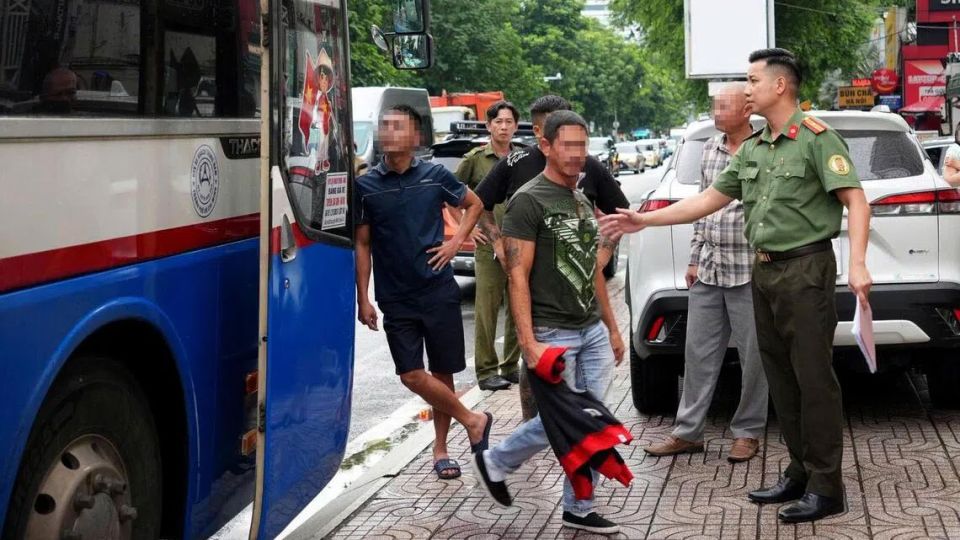
Vietnamese immigration officials welcomed 110 deportees from the United States in mid-September, the most recent wave in a dramatic escalation of removals that began in 2025.
Federal records reveal that US Immigration and Customs Enforcement deported 1,851 Vietnamese nationals across fiscal years 2024, 2025, and through June 2026, with 1,094 removals occurring in FY2026 alone—a number that has climbed by nearly 200 since.
The surge marks a significant shift affecting individuals who emigrated to America decades earlier and had long enjoyed de facto protection from deportation. Many deportees spent the majority of their lives in the US and now confront daunting challenges: securing identification papers, locating employment, reconnecting with distant relatives, and adjusting to a homeland they scarcely recognize.
Ho Chi Minh City police acknowledged the difficulties in a social media statement following the latest group's arrival, noting that some returnees struggle to secure identity documents, reach family members, and locate housing or work. Authorities highlighted especially vulnerable cases: elderly deportees in fragile health, those whose relatives have died, and individuals who lost touch with family years ago.
The Department of Homeland Security maintains that individuals subject to deportation received full due process and final removal orders from immigration judges.
A Life Interrupted
Andrew Fenton, 58, retains almost no memory of his biological parents. His Vietnamese birth certificate—obtained only after deportation more than a year ago—identifies him as Nguyen Bao Linh, born October 23, 1967. The document lists his father as Nguyen Bao Tinh, a South Vietnamese Air Force officer, while his mother's name remains blank.
Fenton recalls being raised by his father at a Danang airbase while his mother cared for aging parents in Hanoi. As the war drew to a close in 1975, his father falsely declared him an orphan so an American couple could adopt him and bring him to the United States.
Despite five decades in America, Fenton never obtained citizenship. Neither the adoption agency nor his adoptive parents understood they needed to file specific paperwork to secure his status, assuming his citizenship transferred automatically through the adoption.
Fenton first received a deportation order in 1989 following a drug possession charge, but the absence of diplomatic relations between Washington and Hanoi prevented enforcement. Subsequent arrests for minor theft followed over the years. Each time authorities detained him, his Vietnamese birthplace triggered a flag in their system indicating he could not be removed.
That changed in August 2025 when immigration agents arrested and deported him. Fenton now lives in Vietnam without family, income, or language skills.
Policy Reversal
Vietnamese immigrants who arrived before July 12, 1995—the date the US and Vietnam normalized relations—had historically enjoyed broad protection from deportation under bilateral arrangements.
A 2008 deportation agreement between the two nations explicitly exempted pre-1995 arrivals. However, the Trump administration began pressuring Vietnam to accept some of these long-term residents, according to immigration attorney Tin Nguyen, who practices in both countries.
In November 2020, near the end of Trump's first term, the countries signed a memorandum creating a framework for returning certain pre-1995 immigrants. When Trump began his second term in January 2025, ICE intensified detention and removal of this population. By June 2025, the agency formally abandoned its longstanding practice of treating pre-1995 Vietnamese as unlikely candidates for deportation.
More than 8,600 Vietnamese nationals currently face removal orders in the US, according to the Asian Law Caucus.
Tin Nguyen noted that foreign governments, facing threats of tariffs and trade restrictions, have grown more willing to accommodate the Trump administration's immigration priorities. Green card holders who lived in America for decades without pursuing citizenship now face deportation risk, particularly those with past convictions.
Half of Vietnamese deportees between 2025 and 2026 had convictions dating back at least twenty years, according to the Southeast Asia Resource Action Center.
One man in his fifties—identified only as Lam T—faces removal for creating a fake driver's license as a teenager. Detained twice, in 2003 and early 2026, he was released both times. After receiving a gubernatorial pardon, T filed to reopen his case, arguing his conviction no longer renders him deportable. His attorney hopes an immigration judge will reinstate his green card and eliminate the deportation threat.
T's wife Susan, speaking anonymously due to the pending case, described living in constant fear of re-detention. The family, including three young children, relies entirely on her income while T remains unemployed in the Midwest.
"I have crippling anxiety," Susan said, describing the nightmare of her husband calling to say he's been detained with no indication of his location.
Deportations of Southeast Asian nationals have surged since Trump's second term began. SEARAC reports that 42 percent of all Southeast Asian deportations since 1998 occurred in FY2025 and FY2026, while 51 percent of Vietnamese removals happened during the same period.
Difficult Homecomings
Do Phi Long, 60, left Vietnam as an Amerasian in 1989 and settled in Orange County, California, where his wife and two sons still live.
A domestic dispute in 1997 led to his arrest and a 15-day detention. A decade later, a DUI arrest resulted in the revocation of his green card and a deportation order that went unenforced when Vietnamese authorities refused to accept him. After 90 days, Long was released on the condition he report regularly to immigration officials.
ICE agents arrested Long at a gas station in January 2025, just before Lunar New Year. It took months for Vietnamese authorities to issue him a passport. On August 13, 2025, Long and dozens of other deportees landed at Hanoi's Noi Bai airport.
Long now operates a small coffee shop in Long Thanh, Dong Nai province, approximately 55 kilometers east of Ho Chi Minh City. He described feeling disoriented by the unfamiliar surroundings, having never visited Hanoi before his deportation.