
China Touts Progress in Fighting Online Fraud but Acknowledges Challenges Remain
A top Chinese security official has underscored the scale of telecom and internet fraud affecting the country, noting that hundreds of thousands of citizens fall victim each year, with financial losses reaching tens of billions of yuan.
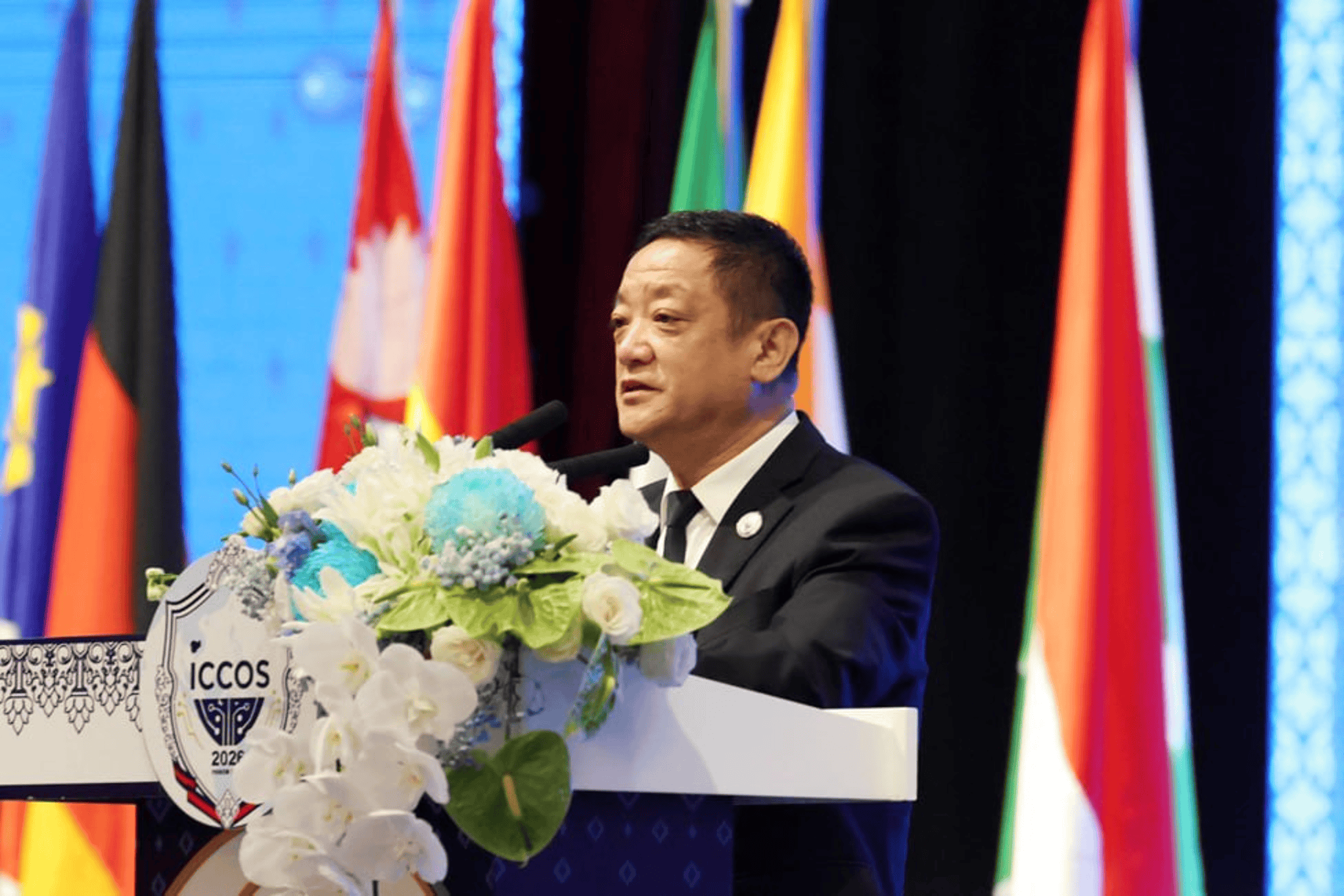
Speaking at the International Conference on Combating Online Scams (ICCOS) held in Phnom Penh, Yang Weilin, China's Vice Minister of Public Security, outlined Beijing's sustained campaign against online fraud both at home and abroad.
Zero Tolerance Approach
Yang described China's strategy as one of "zero tolerance," involving continuous domestic crackdowns aimed at rooting out the conditions that allow such crimes to flourish. Internationally, he said China has leveraged bilateral and multilateral mechanisms to dismantle scam compounds and criminal networks, claiming that the gambling and fraud landscape in Southeast Asia has significantly improved as a result.
High-Profile Arrests Through Cambodian Cooperation
The vice minister pointed to several prominent arrests made possible through joint operations with Cambodia, describing the detained individuals as key financiers and organizers behind gambling and fraud networks:
- Chen Zhi, founder of Prince Group, was arrested and sent to China in January over involvement in so-called "pig-butchering" scams and other illicit operations. US authorities separately seized an estimated $14–15 billion in bitcoin connected to these activities.
- Li Xiong, former chairman of Huione Group — a Cambodian financial conglomerate with ties to payments, currency exchange, insurance, and banking — was arrested and extradited in April. The group has been linked to Prince Group.
- Liu Ren, who allegedly ran Jinbei Group, an operation that shifted from online gambling to running online scams, was arrested and deported to China in June.
Regional and Global Partnerships
Yang highlighted cooperation with Myanmar that led to the dismantling of the so-called "Four Major Families" criminal organizations in the country's north. He also referenced joint Chinese-Thai efforts that resulted in the extradition of fugitive She Zhijiang, which he said sent a strong deterrent message.
Beyond Southeast Asia, Yang said China has pursued extensive partnerships with countries across multiple continents, including the United Arab Emirates, Vietnam, Laos, the Philippines, Malaysia, Indonesia, Pakistan, Sri Lanka, Madagascar, Kyrgyzstan, the United States, and Spain.
Challenges Persist
Despite the progress, Yang acknowledged that fraud has not been fully eliminated. Criminal operatives continue to relocate globally, and the underground industries supporting these schemes remain resilient in the face of enforcement actions. He described the overall situation as still complex.
Yang urged continued international cooperation while cautioning against turning the issue into a political tool. "The fight against transnational crime must not be politicised, and there should be no room for stigmatisation or confrontation," he said.
Praise for Cambodia's Efforts
The Chinese official commended Cambodia for its approach to tackling fraud through stronger legislation, rigorous law enforcement, anti-corruption measures, and international engagement. He noted that Cambodia has conducted sustained operations against fraud syndicates, cleared major gambling and scam compounds from its territory, and arrested and repatriated tens of thousands of individuals involved in fraudulent activities — results he said are clearly visible to the international community.